Leave Your Message

How to Choose the Best Woven Shower Curtain in 2026?

Choosing a Woven Shower Curtain in 2026 is not just a color decision. It means weighing texture, privacy, upkeep, and how the fabric behaves in a damp room. A close weave may feel substantial, while a lighter one can let more light through. Neither detail alone guarantees a better curtain.

Textile designer William Morris offered a useful design principle: “Have nothing in your houses that you do not know to be useful or believe to be beautiful.” His words were not about shower curtains, but they suit this choice. Look for a curtain that works well and feels right in your space. Then check the practical details: dimensions, lining needs, care instructions, and how quickly the fabric dries. A soft cotton texture may look inviting. It may also need more attentive care than a synthetic blend.

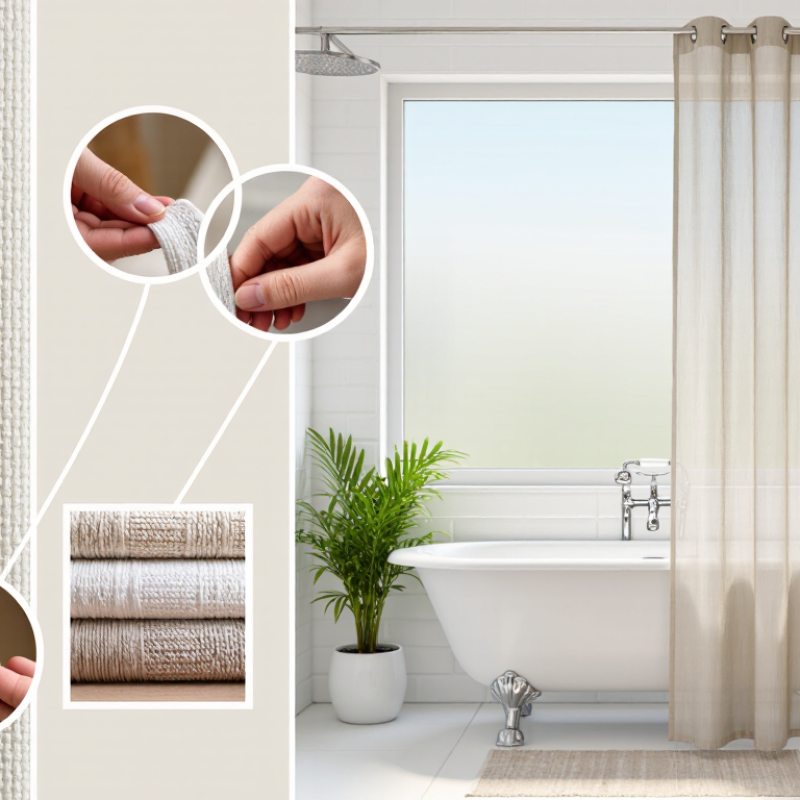
Small details matter. Check the hem. Feel the fabric. Notice how it hangs beside the tub or shower. Product descriptions can help, but they cannot show every room’s lighting or ventilation. That part takes judgment—and sometimes a little trial and error. This guide will compare materials, construction, maintenance, and design so you can choose with clearer expectations. It will also flag trade-offs, because no curtain is perfect for every bathroom. A woven look is appealing, but appearance alone is not enough.
How to Choose the Best Woven Shower Curtain in 2026?

Identify Woven Structure by Fiber, Weave Type, and Fabric Weight in GSM

How to Choose the Best Woven Shower Curtain in 2026?

Start with the fiber label. Polyester is common, while cotton and blended yarns feel different and may need different care. Textile Exchange’s Materials Market Report 2024 estimates that polyester made up 57% of global fiber production in 2023. That figure describes the wider textile market, not shower-curtain performance. Check the care instructions, then feel the fabric: cotton often has a softer hand, while tightly woven synthetics can feel smoother. Small differences matter.

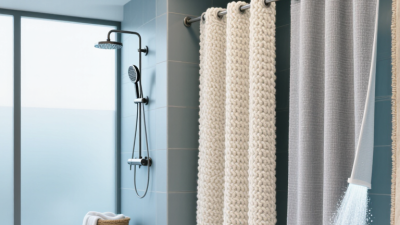
Look closely at the weave. Plain weave has a simple, even grid; basket weave shows paired yarns and a more textured surface. Hold the curtain toward a light. Uneven gaps can reveal a loose construction, though this check is not a durability test. GSM means grams per square metre, or fabric mass over a set area. A higher GSM often feels heavier in the hand, but it does not prove better water resistance or longer life. Check the fabric’s coating and care guidance too. There is no perfect number. Weave, fiber, finishing, and handling all shape how a curtain hangs and dries. A slightly imperfect drape may be fine if it suits your bathroom and routine.
Compare Water Repellency Using AATCC 22’s 0–100 Spray Rating

How to Choose the Best Woven Shower Curtain in 2026?

AATCC TM22, published in the AATCC Technical Manual, measures water repellency with a spray test and assigns a visual rating from 0 to 100. A 100 indicates no sticking or wetting; lower scores show increasing surface wetting. The method sprays 250 mL of water onto a fabric specimen held at an angle. It gives shoppers a common basis for comparing fabrics, not a guarantee that a finished curtain will stop every leak.

Look for the test rating and ask whether it applies to the curtain fabric or only a swatch. A higher score can mean droplets bead on the surface, but seams, hems, and repeated use still matter. Check the stitching and edges. Imagine water striking the curtain near its lower hem; that area may behave differently from a flat test sample.

AATCC TM22 evaluates surface wetting, not water passing through seams or the curtain as a whole. One number can mislead. I would compare ratings under the same test conditions, then consider whether the fabric feels practical for your bathroom. A little uncertainty is reasonable: a strong spray rating is useful evidence, not a promise of perfect performance.

Check Mold Resistance Against AATCC 30 Fungal-Test Methods

When comparing woven shower curtains in 2026, treat “mold resistant” as a claim to verify, not a guarantee. Ask whether the fabric was evaluated using AATCC 30, a set of methods for assessing fungal resistance in textiles. The exact procedure matters. A test report should identify the method used, the fungi tested, and how growth was assessed. “Tested to AATCC 30” alone leaves useful details unclear.

Look for results on the finished fabric, not just a similar fiber sample. Ask whether testing was repeated after laundering, since washing may affect a finish. Check how the report describes visible fungal growth; a low-growth result is more informative than a vague “pass.” Also inspect the curtain’s hems and seams, where damp folds can linger. Small details matter.

Still, one lab result is not a bathroom. AATCC 30 testing does not recreate daily splashes, poor ventilation, soap residue, or long periods of dampness. A curtain can perform well in a controlled test and still need regular cleaning and full drying. I would compare the test details with practical care instructions, then choose a fabric that is easy to wash and dry. Not perfect, perhaps, but more useful than relying on a label alone.

Match Curtain Dimensions to Your Shower Space and Rod Setup

A woven shower curtain looks intentional only when its dimensions suit the space. Measure the rod’s usable width, then measure from the rod to the floor or tub rim. The NKBA Kitchen & Bathroom Planning Guidelines recommend a shower interior of at least 36 by 36 inches; this is a useful planning reference, not a curtain-size rule. Houzz’s 2024 U.S. Bathroom Trends Study reports that 84% of renovating homeowners upgraded their showers, making careful fit worth the effort.

For width, allow extra fabric beyond the opening so the curtain can gather without leaving gaps. A common 72-inch-wide curtain may suit a narrower alcove, but measure your rod before buying. For length, leave a small gap above the floor, or let the hem sit just inside the tub. Check the rod height and its shape, too: a curved rod changes the span, and a low rod can make a standard curtain drag. I still recheck these measurements; walls and tubs are rarely perfectly square.

Tips: Measure at the top and bottom of the opening. Use the larger width, and confirm the curtain’s finished dimensions—not just its listed size. If the rod is unusually wide or mounted high, a custom length may fit better.

How to Choose the Best Woven Shower Curtain in 2026?

Match Curtain Dimensions to Your Shower Space and Rod Setup

These planning examples use a curtain width of 1.5 times the rod span to allow for folds and coverage: a 48-inch span pairs with about 72 inches of fabric, a 60-inch span with 90 inches, and a 72-inch span with 108 inches. Measure your rod span before choosing a curtain, and check the curtain’s length against your rod height and desired hem position.

Verify Fabric Safety Through OEKO-TEX STANDARD 100 Certification

How to Choose the Best Woven Shower Curtain in 2026?

A woven shower curtain can add texture without making a bathroom feel crowded. Check the fabric label and care instructions before buying. Then look for OEKO-TEX STANDARD 100 certification, which indicates that the tested textile components were assessed for harmful substances. The exact scope matters. A certificate may cover specific materials or product components, so confirm that it matches the curtain you are considering.

Do not treat a certification as proof of every quality. It does not automatically confirm that a curtain resists mildew, keeps water contained, or will last for years. Check seams, hanging holes, and fabric weight. A dense weave may feel sturdy, but it can also take longer to dry. I would pause over vague safety claims; they are easy to misread.

Tips: Find the certificate number and check its validity through the official OEKO-TEX verification service. Match the listed product details as closely as possible. Ask whether coatings, dyes, or other finishes are included in the certification scope. Then compare care guidance with your bathroom’s ventilation and cleaning routine. A small mismatch is worth noticing.

How to Choose the Best Woven Shower Curtain in 2026? - Verify Fabric Safety Through OEKO-TEX STANDARD 100 Certification

What to Check What to Look For Why It Matters Buyer’s Verification Step
OEKO-TEX® STANDARD 100 A current certificate or label that can be checked using the OEKO-TEX® Label Check. Confirm the certificate covers the specific curtain or relevant textile article. STANDARD 100 tests textiles for harmful substances. Certification applies to the tested article and its stated scope; it is not a general guarantee about every product from a seller. Match the certificate or label details to the product, check its validity, and ask which components are included if the scope is unclear.
Fabric and fiber content A clear fiber-content statement, such as polyester, cotton, or a stated blend. Check whether the fabric is woven and whether any backing or coating is present. Fiber type and finishes affect feel, care requirements, drying behavior, and how the curtain handles repeated bathroom use. Read the product label and care instructions; do not infer fiber content from appearance alone.
Weave and construction Evenly formed fabric, secure seams, reinforced top edge, and well-finished hanging holes or grommets. Consistent construction can help the curtain hang neatly and withstand regular opening, closing, and laundering. Inspect close-up photos or the item in person, paying attention to seam puckering, loose threads, and weak-looking attachment points.
Water management Clear information on whether the woven curtain is water-repellent, water-resistant, or intended to be used with a separate liner. Woven fabric is not automatically waterproof. A liner may be needed to help keep water inside the shower or tub area. Follow the product’s use instructions and check whether a liner is recommended or included.
Fit and dimensions Published width and length, plus the number and spacing of hanging openings where provided. A suitable size helps provide adequate coverage and reduces gaps or excess fabric near the floor or tub. Measure the rod and the intended hanging length before ordering; compare those measurements with the listed finished dimensions.
Care and drying Specific washing, drying, and maintenance instructions supplied by the maker. Following the care label helps reduce the risk of shrinkage, damage, or premature wear. Drying the curtain after use can help limit prolonged dampness. Choose care instructions that fit your routine, and follow the label rather than assuming all woven fabrics are machine-washable.
Overall claim accuracy Separate, specific evidence for claims such as water resistance, easy care, or certification. OEKO-TEX® STANDARD 100 addresses harmful-substance testing; it does not by itself establish waterproof performance, durability, or environmental impact. Evaluate each claim against the relevant label, instructions, or test information instead of treating one certification as proof of every feature.

Note: OEKO-TEX® and STANDARD 100 are certification marks. Check the current certificate details and product scope before purchase.