Leave Your Message

7 Tips for Choosing the Best Woven Shower Curtain

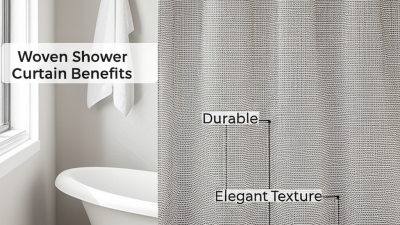
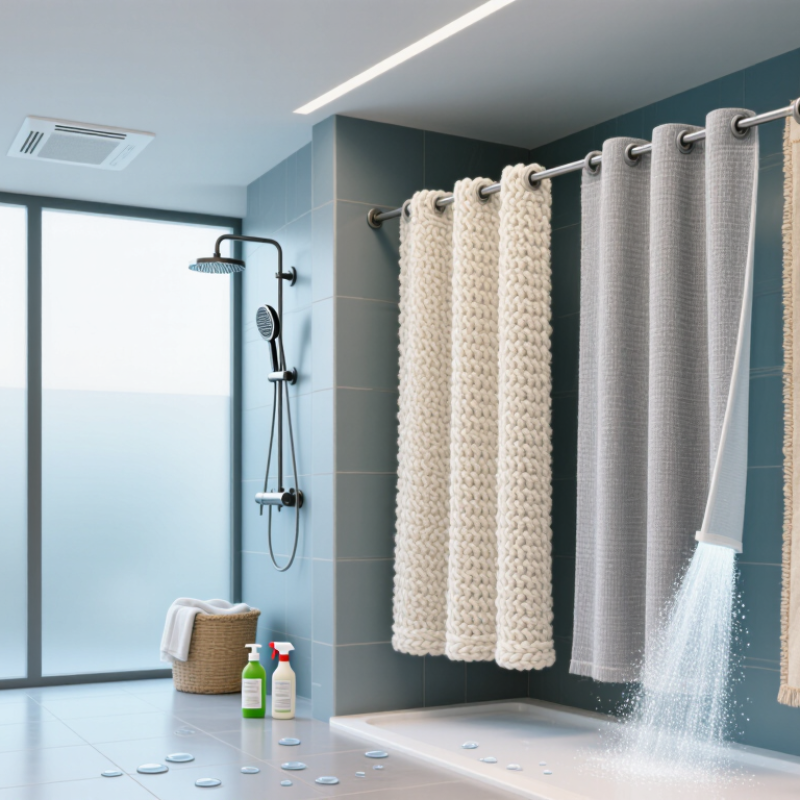
Choosing the right Woven Shower Curtain involves more than matching colors with bathroom tiles. Texture, fiber content, weave density, water resistance, and maintenance all affect daily performance. A thick basket weave may feel luxurious, yet it can dry slowly in a poorly ventilated bathroom.

Industry data supports this growing attention to material quality. Grand View Research reports continued expansion in the global home textiles market, driven partly by demand for durable, design-focused household products. The U.S. Environmental Protection Agency also emphasizes moisture control and ventilation as practical ways to reduce indoor dampness. These findings matter because a beautiful curtain can still develop odors when moisture remains trapped in its fibers.

Textile consultant Deborah Young once said, “Fabric performance begins with understanding the fiber and its construction.” That principle guides this article’s seven practical tips. Look closely at the label. Check whether the curtain is cotton, polyester, linen-blend, or recycled fiber. Examine the hems, grommets, and weave spacing. Small details often reveal long-term value.

Do not trust appearance alone.

A tightly woven polyester curtain may resist splashes better than loosely woven cotton. However, cotton can offer a softer hand and more natural visual warmth. The best choice depends on ventilation, washing habits, household humidity, and personal priorities. Some recommendations may feel obvious, while others deserve reconsideration. Even experts can overlook how quickly a dark, textured curtain shows soap residue. These seven tips will help you compare construction, care requirements, privacy, sustainability, and price with clearer judgment.
7 Tips for Choosing the Best Woven Shower Curtain

Define Woven Shower Curtains by Fiber, Weave, GSM, and Liner Function

7 Tips for Choosing the Best Woven Shower Curtain

Define the fabric first. Tip 1: Choose polyester for quick drying and stable color. Textile Exchange’s Materials Market Report 2024 estimates polyester represented about 57% of global fiber production in 2023. Tip 2: Consider cotton for a softer, more natural hand. It may absorb moisture longer. Tip 3: Check the fiber blend, because mixed yarns can balance softness, strength, and shrinkage. These details matter near a wet bathtub.

Tip 4: Inspect the weave closely. A tight plain weave usually resists snagging, while a looser basket weave feels more decorative. Tip 5: Read the GSM figure, meaning grams per square meter. Around 180–250 GSM often feels substantial without becoming difficult to move. Higher GSM can improve drape, but it is not automatically better. I have found heavy curtains dry more slowly in poorly ventilated bathrooms.

Tip 6: Examine the liner function. A water-resistant liner should guide droplets toward the tub, while the woven outer panel provides texture and privacy. Tip 7: Look for reinforced hems, rust-resistant eyelets, and evenly spaced stitching. AATCC textile testing methods commonly evaluate water repellency and dimensional stability, but household washing can still change performance. Leave room for doubt. Product claims need practical checking. Hold the fabric near a light, measure its weight, and inspect the bottom edge before buying.
7 Tips for Choosing the Best Woven Shower Curtain

Typical woven shower curtain fabric weight by fiber type

GSM means grams per square metre and indicates fabric density. Polyester microfiber is usually lighter and dries quickly, while cotton, linen, and hemp fabrics commonly use higher GSM constructions for a fuller drape. Actual weight varies with weave tightness, finishing, and whether a waterproof liner is included.

Compare Cotton, Polyester, and Blends Using ASTM D3776 Fabric Weight

A woven shower curtain should feel substantial, but fabric weight needs careful interpretation. ASTM D3776/D3776M measures mass per unit area, usually reported in grams per square metre (gsm). Ask for the tested gsm, test procedure, and conditioning details. A vague “heavyweight” label proves very little.

Compare cotton, polyester, and blends using the same ASTM method. Cotton can provide a soft, textured hand, but it absorbs moisture and may dry slowly in a poorly ventilated bathroom. Polyester generally resists moisture and dries faster. Blends can balance softness, strength, and maintenance.

The 2024 Materials Market Report from Textile Exchange records polyester at about 57% of global fibre production and cotton at about 22%. Those figures show market scale, not automatic suitability.

Check seven practical details: verified gsm, weave tightness, drape, drying time, seam strength, grommet reinforcement, and sample performance. Higher gsm may improve opacity and hang, yet it can slow drying. I learned that the hard way with a curtain that looked premium but stayed damp near the hem.

ASTM weight also cannot confirm water repellency, mildew resistance, or colorfastness. Request those test results separately. Examine the weave against a window, flex the top edge, and measure how quickly a wet sample dries. A heavier fabric is not always the better curtain.

Evaluate Water Repellency with AATCC 22 Spray Ratings

When choosing a woven shower curtain, water repellency deserves careful attention. A fabric can look attractive yet absorb water quickly. The AATCC 22 spray test offers a useful comparison.

This test sprays a measured amount of water onto the fabric’s face. A trained evaluator then compares the wetting pattern with standard photographs. Ratings usually range from 0 to 100. Higher scores indicate better surface resistance. A rating of 100 means the water forms droplets and rolls away easily. A rating near 50 suggests visible wetting.

Look for a recent AATCC 22 report, not only a printed claim. Ask whether the test used the finished curtain, including its actual coating. Laboratory fabric may perform better than a sewn product. Small details matter. Examine the top hem, side seams, and bottom edge. Water can travel through needle holes, even when the main fabric repels droplets.

I once tested a woven curtain beside a tub. Its surface stayed fairly dry, but the lower seam darkened after several showers. That result changed my judgment. Spray ratings do not measure complete waterproofness, drying speed, or mildew resistance. They also may decline after repeated washing. Check care instructions and laundering data when available. I would accept a slightly lower rating for a heavier, better-constructed curtain. Numbers help, but they do not replace close inspection.

Select 180×180 cm or 180×200 cm Sizes and Secure Grommet Designs

7 Tips for Choosing the Best Woven Shower Curtain

Choosing the right size prevents daily frustration. Measure from the curtain rod to the floor, not from the ceiling. For standard tubs, a 180×180 cm curtain usually provides balanced coverage. It should hang close to the floor without dragging. A wet hem can collect dust and develop an unpleasant smell.

Choose 180×200 cm when your rod sits higher or your shower area needs extra length. This size can reduce side splashing around a deeper tub. However, extra fabric may bunch on the floor if measurements are ignored. I once selected a longer curtain for better coverage, but the bottom needed frequent adjustment. That small mistake changed the whole experience.

Grommet construction deserves close inspection. Look for evenly spaced holes, reinforced fabric, and smooth metal or durable polymer rings. Each grommet should hold its shape when the curtain moves across the rod. Corrosion-resistant materials are practical in humid bathrooms. Pull gently before installation. Weak grommets often reveal themselves early. A dense woven fabric can improve privacy and provide a more substantial appearance. Still, woven material is not always fully waterproof. Pair it with a suitable liner when water resistance matters. Check the care instructions, too. Some curtains shrink slightly after washing, which can affect a carefully chosen 180×180 cm fit. Measurements help, but they are not perfect.

Check AATCC 61 Care Testing, OEKO-TEX Certification, and Label Claims

A woven shower curtain should survive steam, splashes, and repeated washing.

Start with the care label, not the product photograph. AATCC TM61 uses a 45-minute accelerated laundering test, roughly equal to five typical home washes. This test helps compare colorfastness and fabric stability, but it does not predict every bathroom condition. Heat, hard water, and poor ventilation can still shorten service life.

Ask for the AATCC test method, temperature, detergent, and result. Vague phrases such as “tested for durability” are weak evidence.

Check shrinkage, shade change, seam strength, and water-repellent performance separately. The curtain may pass one test and fail another.

I once trusted a strong fabric description, yet the hem warped after several washes. That experience still makes me question incomplete testing.

OEKO-TEX STANDARD 100 certification adds a different safeguard. It evaluates textile components for harmful substances, including dyes, finishes, threads, and accessories.

Certification is generally valid for one year, so verify the certificate number and product scope through the official database. A certificate does not prove superior waterproofing, recycled content, or long-term durability.

Read every label claim carefully. Textile Exchange’s Materials Market Report 2024 also shows polyester represented about 59% of global fiber production in 2023, making fiber disclosure increasingly important.

Choose a curtain with clear fiber content, washable-care instructions, and claims supported by current test documents.