Leave Your Message

What Are the Best Bathroom Curtains in 2026?

The best Bathroom Curtains in 2026 do more than soften a room. They balance privacy, moisture control, easy cleaning, and a look that suits your space. A curtain beside a steamy shower faces different demands from one covering a bathroom window. Fabric, lining, ventilation, and fit all matter.

A useful design principle comes from designer William Morris: “Have nothing in your houses that you do not know to be useful, or believe to be beautiful.” Applied to bathroom curtains, that means checking both function and appearance. Measure the window or shower area carefully. Look for washable materials, a suitable liner where needed, and hardware that holds securely. In a small bathroom, a light color may help the space feel brighter, but it will not solve poor airflow.

Small details matter. A curtain that looks elegant online may cling to wet skin or drag across a damp floor at home. This guide explores fabric choices, privacy, maintenance, sizing, and styles worth considering in 2026. It also weighs practical trade-offs, because no single curtain suits every bathroom. A little doubt is healthy: product labels and polished photos cannot show how a fabric feels after months of steam.
What Are the Best Bathroom Curtains in 2026?

What Bathroom Curtains Are and How They Function

A bathroom curtain is a movable splash barrier, not a waterproof wall. It hangs inside the tub or shower and helps keep spray off the floor, nearby towels, and cabinetry. A liner usually faces the water; a fabric curtain can add privacy and soften the room’s appearance. The lower edge should sit inside the tub, with enough overlap to limit gaps. Small detail. A curtain cannot stop every splash, especially when the showerhead points outward.

It also does not remove steam. The U.S. Environmental Protection Agency’s A Brief Guide to Mold, Moisture and Your Home advises keeping indoor humidity below 60%, ideally between 30% and 50%. That is a room-level target, not a curtain rating. ASHRAE’s residential ventilation guidance likewise identifies bathroom exhaust as a way to remove moisture at its source. So use the fan, leave the curtain partly open after bathing, and let folds dry rather than bunching them against the tub. A damp hem can stay wet longer than expected. I used to assume a curtain solved the moisture problem; it mainly redirects droplets. The distinction matters. Choose a washable, quick-drying material, but check its care instructions: frequent washing may be needed, and no fabric stays fresh by itself.

Which Curtain Materials Work Best in Bathroom Conditions

Polyester is often a practical choice for a bathroom curtain because it absorbs less water than cotton and usually dries faster. That matters. The U.S. Environmental Protection Agency’s A Brief Guide to Mold, Moisture and Your Home recommends keeping indoor humidity below 60%, ideally between 30% and 50%. A quick-drying curtain can help reduce lingering dampness, but it cannot control room humidity on its own. Leave space for airflow and spread the curtain open after showering.

Cotton feels soft and hangs naturally, yet it can hold moisture longer. In a poorly ventilated bathroom, that means more time spent damp and more frequent washing. A removable polyester liner can keep a decorative cotton curtain from taking every splash. Neither material is mold-proof. Check care labels and wash curtains regularly, especially along the hem, where water collects.

For coated fabrics, look for specific performance information rather than relying on “water-resistant” wording alone. AATCC TM22, a textile-industry spray test, evaluates surface water repellency; it does not prove mildew resistance or show how quickly a curtain dries at home. Not waterproof. In practice, even a good fabric can stay wet if it bunches against a tub or blocks airflow. I would choose easy washing and fast drying over a luxurious feel, though that trade-off is not perfect.

How Bathroom Curtain Styles Compare in 2026

Bathroom curtains in 2026 balance privacy, drying time, and style. Polyester is a practical choice for busy bathrooms because it dries relatively quickly and comes in many colors. Textured weaves can soften a plain room without making the curtain feel heavy. Cotton looks relaxed and feels substantial, but it may stay damp longer. In a small bathroom with weak ventilation, that difference matters.

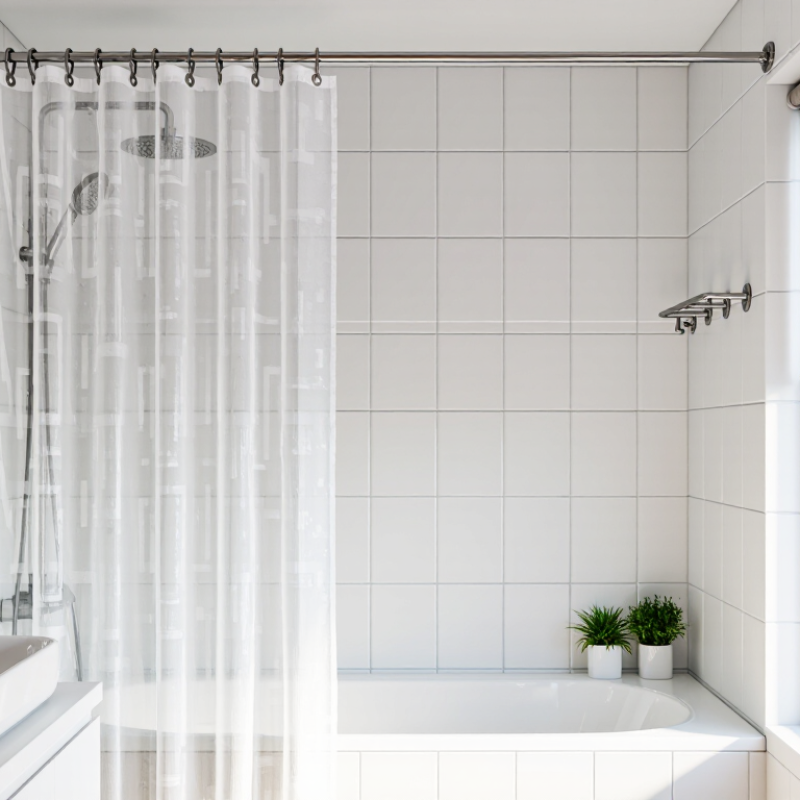
Clear or lightly frosted curtains let daylight pass through, which can make a narrow shower feel less boxed in. They offer less visual privacy, though. Opaque curtains provide more coverage and can add a strong color accent, but dark fabric may make a dim room feel smaller. A fabric curtain with a washable liner offers a flexible middle ground. Check that the hem hangs inside the tub or shower; otherwise, water can reach the floor. Small detail. Big difference. Still, a curtain alone cannot fix poor airflow.

Tips: Choose a washable material and check its care label before buying. Open the curtain after showering so it can dry fully. Look for a weighted hem if it tends to cling, but remember that added weight can make laundering slightly less convenient.

What to Consider for Privacy, Fit, and Maintenance

Choosing bathroom curtains starts with deciding how much privacy the room needs. For a street-facing window, a tightly woven or lined fabric can soften outside views without making the room feel closed in. Light-filtering fabric suits a window that faces a private garden. Hold a sample near the glass during daylight; colors and coverage can look different once backlit. Small details matter.

Fit is more than appearance. Measure the window and rod, then check how far the curtain hangs from the sill, sink, or radiator. A curtain that puddles beside a damp sill may collect dust and stay wet. For a shower, use a curtain made for wet areas, and choose a width that overlaps enough to limit splashes. Measure twice. I used to assume a standard size would work, but small differences in rod placement can leave awkward gaps.

Maintenance depends on airflow and fabric. Washable curtains are practical in humid rooms, especially where condensation gathers on the glass. Check care instructions before buying; some fabrics shrink or lose their finish with hot washing. Leave space for air to circulate, and open the curtain after bathing so folds can dry. It is easy to forget this on busy mornings. Look for mildew at the hem and along seams, where moisture can linger.

What Are the Best Bathroom Curtains in 2026? — What to Consider for Privacy, Fit, and Maintenance

Curtain type Privacy Light control Fit guidance Maintenance Best suited for
Room-darkening polyester High when the fabric is opaque; check for light gaps at the sides and top. Blocks most daylight, making it useful where stronger light control is wanted. Measure the rod width and window height. For fuller coverage, choose combined panel width about 1.5–2 times the rod width. Many polyester curtains are machine washable, but follow the care label; dry fully before rehanging. Street-facing or closely overlooked windows where privacy is the priority.
Sheer curtain with an opaque layer Sheers soften views in daylight but usually do not provide dependable nighttime privacy on their own. Close the opaque layer after dark. Sheers diffuse daylight; the second layer adds flexible light control. Use a double rod or another secure two-layer system. Allow enough width for both layers to hang without gaps. Wash each layer according to its care label. Delicate sheers may need a gentle cycle or hand washing. Bathrooms where natural light is valued and privacy needs change throughout the day.
Quick-drying polyester Ranges from moderate to high depending on the weave, color, and lining; opaque fabric generally provides more coverage. Light filtering varies by fabric density. A lining can increase light blocking. Choose a length that clears the sill and stays away from frequently wet surfaces. Check the curtain’s finished dimensions before ordering. Often easier to wash and quicker to dry than heavier natural-fiber fabrics. Regular ventilation still helps limit dampness. Humid bathrooms where easy laundering and faster drying are practical priorities.
Lined cotton or cotton-blend curtain Good with an opaque lining; an unlined lightweight cotton may allow silhouettes when the room is lit at night. Good light control when lined; unlined versions let in more daylight. Confirm the rod can support the curtain’s weight, especially when the fabric is lined. Keep the hem clear of wet floors. Check shrinkage and washing instructions before laundering. Dry thoroughly to prevent the fabric staying damp. Bathrooms with effective ventilation and a preference for a softer, fabric-based look.
Textured or linen-look polyester Usually moderate to high with a dense weave; verify opacity against a bright light if privacy is important. Typically filters daylight rather than fully blocking it unless lined. Use the same width rule as other panels: total fabric width around 1.5–2 times the rod width creates a fuller appearance. Many versions can be machine washed, though textured finishes may require gentle care. Follow the product label. Bathrooms where a decorative, textured appearance is wanted without choosing a delicate natural fabric.

Measuring tip: Measure the rod or track rather than estimating from the glass alone. For nighttime privacy, test fabric opacity with the bathroom light on and the room dark. Choose a washable curtain and allow it to dry completely between periods of heavy moisture.

How to Choose the Right Bathroom Curtain for Your Space

Measure the shower area before choosing a curtain. A standard tub may still need extra width if the curtain must overlap the edges. Check the rod height, too; a curtain that drags on the floor can stay damp and collect grime. Small details matter. For a compact bathroom, a light-colored curtain can help the room feel less enclosed, while a simple pattern adds interest without crowding the view. Choose a length that keeps water inside the tub or shower. If the bathroom has limited airflow, prioritize quick-drying fabric and washability over a heavy, decorative look.

Think about privacy, light, and daily upkeep. A fabric curtain with a separate water-resistant liner offers flexibility, but it means cleaning two layers. A single, wipeable curtain is simpler, though it may feel less soft. I still find it easy to underestimate how much a curtain billows when the fan is running. A weighted hem or well-placed liner magnets can help. Check care labels and wash the curtain regularly, especially along the hem and folds. No option is perfect. Match the curtain to your cleaning habits, available space, and ventilation—not just the bathroom’s color scheme.