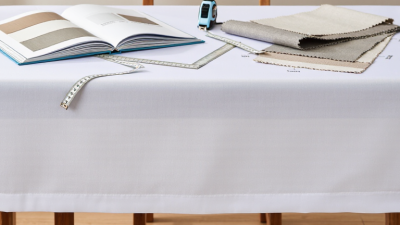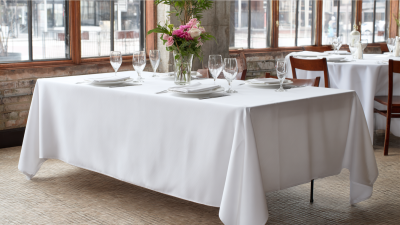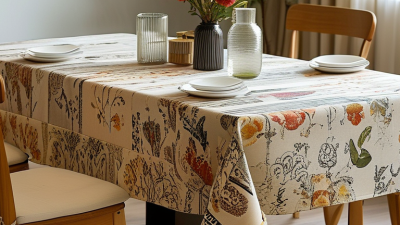
Choosing a reliable tablecloth supplier in China requires more than comparing prices. Global buyers must examine measurements, fabric performance, production consistency, and communication.
Tablecloth Sizing affects the entire dining experience. A cloth that is too short exposes table edges. One that is too long may brush the floor, catch on chairs, or create safety concerns. Textile sourcing specialist Anna Johnson explains, “Accurate sizing is the quiet foundation of a professional table setting.” Her observation reflects daily purchasing realities. Buyers often request a 60-inch round cloth, yet overlook the required drop length, seam allowance, or finished-size tolerance.
Small details matter.
This guide introduces China’s top 10 Tablecloth Sizing suppliers for global buyers. The selection considers custom dimensions, fabric options, color consistency, sample procedures, quality control, packaging, and export experience. It also considers whether suppliers can support hospitality groups, event companies, retailers, and online brands.
Measurements should be confirmed twice. Production assumptions can become expensive mistakes. A buyer may approve a sample with a 12-inch drop, then receive bulk goods with inconsistent finishing. That problem is not dramatic at first. It appears when tables are arranged under bright venue lighting.
No ranking is perfect. Supplier strengths change with order volume, fabric availability, and production schedules. Buyers should still request current samples, technical specifications, and written quotations. They should also clarify shrinkage expectations after washing. These steps improve reliability, although they cannot remove every risk.
The suppliers below offer practical starting points. Their capabilities should be matched with each buyer’s table shape, market requirements, and service expectations.
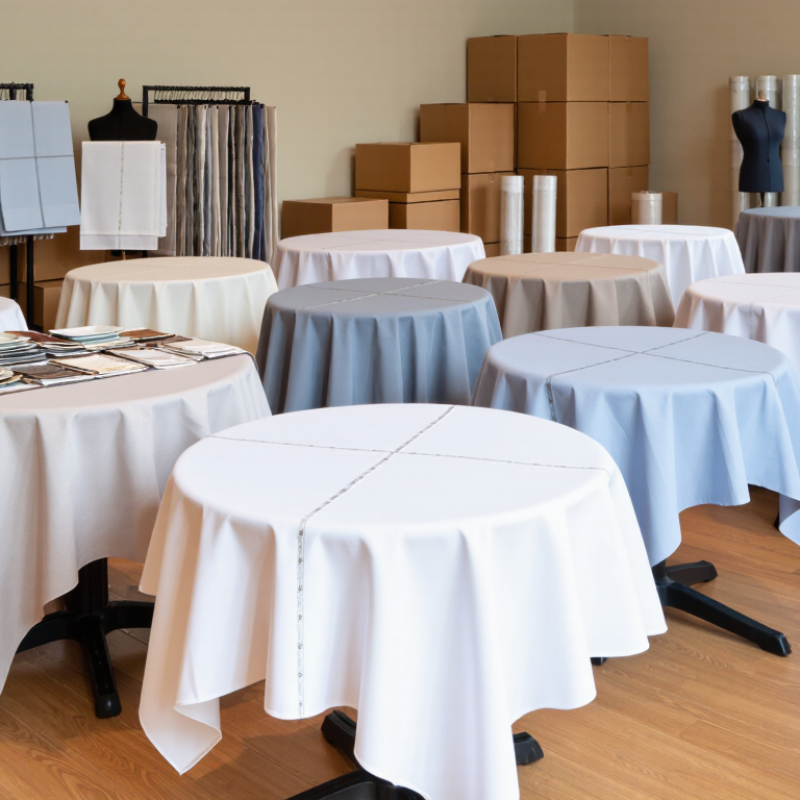
Global buyers need clear tablecloth sizing standards before comparing suppliers. A universal standard does not really exist. Finished dimensions, fabric behavior, and table profiles can vary between factories. The basic formula remains reliable: table length plus twice the desired drop, and table width plus twice the drop. For round tables, add twice the drop to the tabletop diameter. Measure the tabletop, not the old cloth.
Common dining layouts use a 20–30 cm drop for casual service. Formal settings often require a 45–50 cm drop. Floor-length designs may need a 70–80 cm drop, depending on table height. Always confirm whether the supplier lists pre-wash or finished measurements. Cotton and linen can shrink by 2–5% after washing. That detail is easy to miss. It can create costly fitting problems.
Professional buyers should request a measurement chart, fabric composition, sewing tolerance, and a pre-production sample. A tolerance of about 1–2 cm may occur in large-scale cutting, but the acceptable range should be agreed in writing. Convert inches and centimeters carefully, especially for mixed-market orders. Oval tables also deserve attention; a rectangular cloth may hang unevenly at the ends. In sourcing reviews, I have seen attractive samples fail because corner drops were ignored. The lesson is uncomfortable but useful: sizing assumptions need testing. Measure several tables. Check the cloth after laundering. Then approve bulk production.
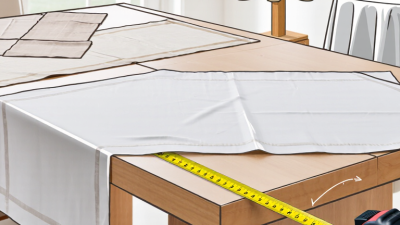
This chart presents ten commonly used tablecloth sizing configurations for international buyers. Dimensions are shown in inches and are calculated for floor-length coverage on tables approximately 30 inches high. The recommended cloth size equals the table dimension plus twice the required drop.
For global buyers, the top 10 tablecloth sizing suppliers differ less by basic measurements than by product range. Most offer round, square, rectangular, and banquet sizes. Stronger suppliers also provide drop lengths from 15 to 30 inches, made-to-measure cutting, and fabric samples before bulk orders. This matters because a 120-inch round cloth can cover a six-foot table, while the same diameter may look too short on a larger venue table. Practical sizing support remains uneven.
Material choice separates the wider ranges. Polyester dominates many commercial collections because it resists wrinkles, dries quickly, and supports repeated washing. Textile Exchange’s 2024 Materials Market Report estimates polyester represented about 57% of global fiber production in 2023. Cotton, linen blends, recycled fibers, and flame-resistant fabrics appear in narrower collections. Grand View Research valued the global home textiles market at approximately USD 133.1 billion in 2023, showing strong demand for varied household and hospitality textiles.
The best-positioned suppliers combine standard inventory with custom options. They may offer stain-resistant coatings, hemmed edges, fitted designs, and color matching for event projects. Yet product lists can create false confidence. A supplier showing 200 sizes may include minor variations only. Buyers should request a size chart, tolerance range, fabric weight, wash-test results, and packaging details. Certification claims also need verification. The comparison is imperfect, but measurable specifications reveal more than catalog volume.
Reliable tablecloth sizing suppliers usually begin with accurate measurements, not guesswork. Their production teams can develop round, square, rectangular, and banquet-length patterns for different hospitality settings. Many factories work with polyester, cotton blends, linen-look fabrics, and recycled materials. Fabric weight may range from lightweight 90 GSM styles to heavier 240 GSM options.
Small details matter.
Strong suppliers provide pre-production samples before bulk cutting. Buyers can check drop length, shrinkage, color consistency, and seam strength. Custom options may include corner shapes, elastic edges, mitered hems, reinforced stitching, and stain-resistant finishes. Digital printing, screen printing, jacquard weaving, and embroidery support different design requirements. Measurement charts should show finished size, tolerance, packaging size, and washing instructions.
Quality control should occur at several stages.
Inspectors can review fabric rolls, cutting accuracy, sewing lines, and final packing. A practical supplier also explains production limits instead of promising everything. No supplier gets every sample perfect. A two-centimeter error can affect a full restaurant setup. Buyers should request physical samples and test washing before approving mass production. Some customization decisions may increase lead time or minimum order quantities, and this needs clear written confirmation. Experienced manufacturers can suggest safer adjustments when a design looks attractive but performs poorly in repeated use.
For China’s top tablecloth sizing suppliers, export readiness begins with measurable quality control. A reliable factory records finished dimensions, fabric weight, shrinkage, colorfastness, and seam strength for every production batch. ISO Survey 2023 reported 1,265,216 ISO 9001 certificates worldwide, showing how common structured quality systems have become. Yet certification alone cannot prove accurate sizing. Buyers should request recent inspection records, calibrated measuring tools, and tolerance charts for round, square, and rectangular cloths.
Material compliance also deserves close review. Textile Exchange’s Materials Market Report 2024 estimated global fiber production at 124 million tonnes in 2023. This scale increases pressure for traceable fibers and responsible processing. Suppliers should provide fiber-content tests, restricted-substance reports, and documentation aligned with destination-market requirements. For polyester or cotton blends, the label should match laboratory results. Small differences can create customs delays or retail complaints. I have seen specifications fail when teams trusted samples more than signed production standards.
Tips: Ask for a pre-production sample, then measure it after washing. Check carton markings, packing lists, and export documents before loading. Request ISO certificates directly from the issuing body. A supplier’s response speed matters, but it is not proof of competence. Keep an independent inspection option. No audit is perfect.
| Supplier Code | Primary Product Scope | Common Fabric Options | Available Finished Sizes | Size Tolerance | Key Quality-Control Practices | Relevant Certifications / Audits | Typical MOQ | Standard Lead Time | Export Readiness | Buyer Documentation |
|---|---|---|---|---|---|---|---|---|---|---|
| CN-TC-01 | Restaurant, hotel, and banquet tablecloths | Polyester, cotton-polyester, recycled polyester | 90×90 cm to 180×350 cm; custom sizes available | ±1.5 cm for finished length and width | Fabric inspection, shade approval, in-line measurement, final AQL inspection | ISO 9001; OEKO-TEX STANDARD 100 available by material or order | 500 pieces per size and color | 25–35 days after sample approval | High | Commercial invoice, packing list, measurement sheet, inspection report |
| CN-TC-02 | Printed tablecloths for retail and hospitality use | Polyester, cotton, linen-look blends | 120×120 cm to 180×300 cm; round and square formats | ±2.0 cm, including post-wash allowance | Pre-production color approval, print registration check, wash testing, carton inspection | OEKO-TEX STANDARD 100; BSCI-style social compliance audit available | 1,000 pieces per print or color | 30–40 days, depending on print complexity | High | Color standards, artwork approval, carton marks, export packing specifications |
| CN-TC-03 | Water-repellent and easy-care table covers | Coated polyester, microfiber, recycled polyester | 90×90 cm to 180×360 cm; custom drop lengths | ±1.5 cm after finishing | Coating-weight control, water-repellency testing, seam inspection, final size audit | ISO 9001; GRS documentation available for recycled content | 300 pieces per specification | 20–30 days for repeat programs | Advanced | Technical data sheet, recycled-content documents, test reports, packing list |
| CN-TC-04 | Jacquard and woven damask table linens | Polyester jacquard, cotton, cotton-polyester damask | 100×100 cm to 180×320 cm; banquet lengths available | ±1.5 cm; pattern alignment tolerance applies | Yarn and construction review, pattern matching, shrinkage test, needle and seam checks | ISO 9001; OEKO-TEX STANDARD 100 available for qualifying fabrics | 500 pieces per design | 35–45 days for new woven designs | High | Construction specification, approved sample, shrinkage report, inspection records |
| CN-TC-05 | Flame-resistant tablecloths for commercial venues | FR polyester, treated polyester blends | 90×90 cm to 180×360 cm | ±1.5 cm; performance testing required by order | Flame-retardant treatment control, batch traceability, dimensional stability testing | ISO 9001; flame-resistance test reports available to the applicable market standard | 500 pieces per size and color | 35–50 days, including laboratory testing | Advanced | Test reports, batch records, care labels, technical compliance file |
| CN-TC-06 | Custom-logo and event tablecloths | Polyester, spandex, stretch polyester | Fitted, rectangular, round, and cocktail-table sizes | ±1.0 cm for fitted products; ±1.5 cm for flat products | Logo-position approval, template control, stretch recovery test, final visual inspection | OEKO-TEX STANDARD 100 available; social compliance audit support | 200 pieces per design | 20–35 days after artwork approval | High | Artwork proof, size template, folding method, barcode and carton documentation |
| CN-TC-07 | Natural-fiber and premium dining linens | Linen, cotton, linen-cotton, hemp blends | 90×90 cm to 180×300 cm | ±2.0 cm due to natural-fiber shrinkage variation | Fiber-content verification, pre-wash testing, shrinkage control, seam-strength inspection | OEKO-TEX STANDARD 100; GOTS or equivalent organic documentation when applicable | 300 pieces per color | 35–50 days | Medium to High | Fiber declaration, shrinkage report, care-label artwork, material certificates |
| CN-TC-08 | Disposable-look reusable table covers for catering | Spunbond polypropylene, polyester, nonwoven blends | 80×80 cm to 180×300 cm | ±2.0 cm | Basis-weight testing, edge-finish inspection, contamination control, carton drop test | ISO 9001; material safety test reports available by destination market | 2,000 pieces per size | 18–28 days | High | Material specification, packing configuration, carton test record, export labels |
| CN-TC-09 | Outdoor and picnic tablecloths | PU-coated polyester, oxford fabric, recycled polyester | 120×120 cm to 180×240 cm; picnic formats available | ±1.5 cm | Water-resistance test, coating adhesion test, colorfastness testing, zipper and snap inspection | GRS documentation available for recycled materials; ISO 9001 support available | 500 pieces per specification | 25–40 days | Advanced | Water-resistance report, material declaration, folding diagram, export packing list |
| CN-TC-10 | Hotel and institutional linen programs | Polyester-cotton, cotton, polyester, recycled blends | 90×90 cm to 180×400 cm; made-to-measure programs | ±1.5 cm under approved measurement standards | Incoming inspection, process control plan, lot sampling, wash-cycle validation, pre-shipment audit | ISO 9001; OEKO-TEX STANDARD 100 and third-party social audits available | 1,000 pieces per size and color | 30–45 days for standard programs | Advanced | Quality manual, inspection plan, size chart, test reports, customs documentation |
Buyer note: Confirm current certificates, test methods, size tolerances, production capacity, and shipment terms directly with each shortlisted supplier before placing an order.
China Top 10 Tablecloth Sizing Suppliers for Global Buyers: Pricing, Minimum Orders, and Supplier Selection Criteria
Pricing depends on fabric weight, finishing, dimensions, and packing. A practical 2025 sourcing benchmark places polyester tablecloths near USD 1.80–5.50 per piece. Custom jacquard or coated designs often reach USD 6–18. These figures are indicative, not quotations. Grand View Research reports that the global home textiles market should grow above 5% annually through 2030, increasing pressure on stable capacity and material planning.
Minimum orders vary sharply. Stock sizes may start at 100–300 pieces, while custom colors and woven patterns commonly require 500–2,000 pieces. Ask suppliers to price 132 × 178 cm, 152 × 229 cm, and round 180 cm options separately. Confirm the drop length, because a 20–30 cm drop suits many dining tables. A spreadsheet can still lie.
Selection should combine price with measurable quality. Request GSM records, pre-shipment measurements, shrinkage results, and colorfastness testing under ISO 105-C06. For repeated orders, require a sealed reference sample and an agreed measurement tolerance, preferably within ±1–2 cm. The International Trade Centre highlights documentation and supplier verification as essential controls in cross-border purchasing. Check factory capacity, inspection procedures, carton strength, and response time. Some suppliers quote low prices but exclude custom labels, inner cartons, or export packing. That mistake is easy to make. Use landed-cost comparisons, not unit prices alone.