How to Choose the Right Tablecloth Size from China?
Choosing the right tablecloth size from China involves more than matching a table’s length and width. Tablecloth Sizing affects appearance, comfort, washing results, packaging, and customer satisfaction. A cloth that is five centimeters too short may expose the table edge. One that is too long can catch on chairs, dishes, or children’s hands.
This guide explains how experienced importers and hospitality buyers calculate suitable dimensions. You will learn how to measure the tabletop, select a practical drop length, and allow for hems and fabric shrinkage. Cotton, linen, polyester, and blended fabrics may behave differently after washing. Always request the supplier’s finished-size chart, not only the cutting size. A physical sample is valuable. It can reveal uneven stitching, inaccurate measurements, color differences, and an uncomfortable drape.
Small details matter.
Chinese manufacturers often offer standard sizes, custom production, and private-label packaging. However, product descriptions can use different measurement terms, including centimeters, inches, finished size, and tolerance. Confirm every detail in writing before production begins. Ask about fabric weight, shrinkage testing, edge finishing, minimum order quantities, and inspection procedures. Photographs help, but they cannot replace a measured sample. Even careful calculations can fail when the table shape, fabric recovery, or washing method changes. That is worth remembering. Reliable sourcing requires checking assumptions, not simply trusting a specification sheet. This introduction will help you compare options clearly and choose tablecloths that fit real tables, real use, and real customer expectations.
Measure the Table: Length, Width, or Diameter in Centimeters
How to Choose the Right Tablecloth Size from China?
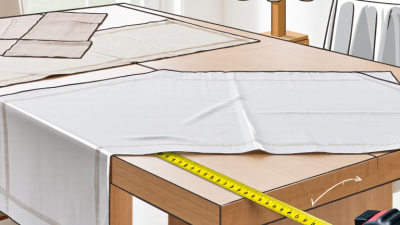
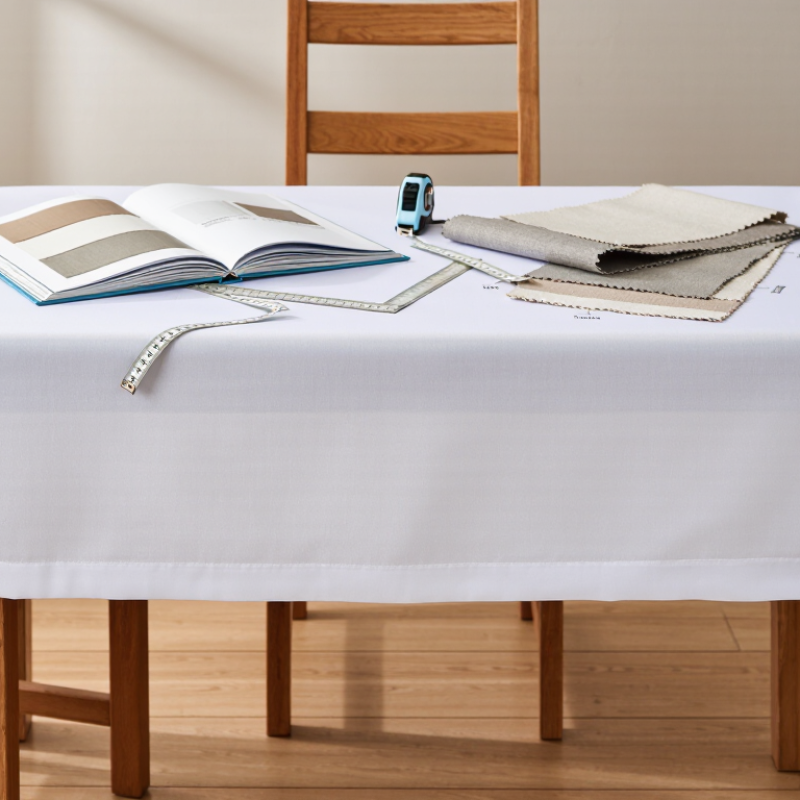
Measure the table before choosing a tablecloth. Use a steel tape for better accuracy. Record every measurement in centimeters. For a rectangular table, measure the length and width across the tabletop. Do not measure from the table legs. For a round table, measure the diameter through the center. A corner-to-corner measurement can create confusion.
The desired drop determines the final cloth size. A dining table usually needs a 20 to 30 centimeter drop on each side. Add twice the drop to both table dimensions.
For example, a table measuring 180 by 90 centimeters needs a cloth between 220 by 130 and 240 by 150 centimeters. A round table with a 110-centimeter diameter needs a cloth about 150 to 170 centimeters wide.
Check the supplier’s size chart carefully. Sizes may be listed before washing.
Fabric can shrink slightly after washing. Ask about the expected shrinkage rate before placing an order. Also confirm whether the stated size has a small tolerance, such as plus or minus two centimeters.
My own measurements are not always perfect, especially with thick table edges. I measure twice and write the numbers down immediately. Small mistakes matter.
A cloth that is five centimeters too short may expose the tabletop unevenly. Send the supplier the table shape, exact measurements, preferred drop, and a simple sketch. Clear centimeters reduce avoidable misunderstandings.
Calculate Size: Table Dimensions Plus Twice the Desired Drop
Choosing the right tablecloth size from China starts with one reliable calculation: table length plus twice the desired drop. Measure the tabletop, not the old cloth. For a 180 cm table and a 25 cm drop, choose 180 + 25 + 25 = 230 cm. The cloth should be about 180 × 230 cm for a rectangular table. A 30 cm drop needs 240 cm.
The desired drop depends on use. Dining tables often look balanced with 20–30 cm drops. Formal settings may use 35–45 cm, while banquet tables can reach the floor. Add the table’s height when a floor-length effect is required. Do not rely on standard size labels. Chinese suppliers may list finished dimensions, fabric dimensions, or approximate measurements. Ask for the final washed size, seam allowance, and tolerance before ordering. ASTM textile performance guidance also reminds buyers to consider dimensional change after laundering. That detail is easy to miss.
Tips: Measure twice. Leave room for shrinkage. The 2024 Textile Exchange Materials Market Report places cotton at roughly 22% of global fiber production, and cotton tablecloths can shrink after washing. Prewash a sample when possible. Check the corners visually; a perfect formula can still look awkward on an oval table. My own practical preference is a slightly shorter drop for busy dining areas, though personal taste matters. Sometimes the “ideal” measurement feels too long.
How to Choose the Right Tablecloth Size from China?
Calculate Size: Table Dimensions Plus Twice the Desired Drop
| Table Shape |
Table Dimensions |
Desired Drop |
Calculation |
Recommended Tablecloth Size |
Suitable Use |
| Rectangular |
48 × 30 in
(122 × 76 cm) |
10 in
(25 cm) |
48 + 20 × 30 + 20 in |
68 × 50 in
(173 × 127 cm) |
Small dining table or compact event table |
| Rectangular |
60 × 30 in
(152 × 76 cm) |
10 in
(25 cm) |
60 + 20 × 30 + 20 in |
80 × 50 in
(203 × 127 cm) |
Four- to six-person dining table |
| Rectangular |
72 × 36 in
(183 × 91 cm) |
12 in
(30 cm) |
72 + 24 × 36 + 24 in |
96 × 60 in
(244 × 152 cm) |
Six- to eight-person dining table |
| Rectangular |
96 × 40 in
(244 × 102 cm) |
12 in
(30 cm) |
96 + 24 × 40 + 24 in |
120 × 64 in
(305 × 163 cm) |
Large dining table or banquet table |
| Rectangular |
120 × 48 in
(305 × 122 cm) |
15 in
(38 cm) |
120 + 30 × 48 + 30 in |
150 × 78 in
(381 × 198 cm) |
Long banquet or conference table |
| Square |
36 × 36 in
(91 × 91 cm) |
10 in
(25 cm) |
36 + 20 × 36 + 20 in |
56 × 56 in
(142 × 142 cm) |
Small square dining table |
| Square |
48 × 48 in
(122 × 122 cm) |
12 in
(30 cm) |
48 + 24 × 48 + 24 in |
72 × 72 in
(183 × 183 cm) |
Four- to six-person square table |
| Round |
36 in diameter
(91 cm) |
10 in
(25 cm) |
36 + 20 in diameter |
56 in diameter
(142 cm) |
Small round dining table |
| Round |
48 in diameter
(122 cm) |
12 in
(30 cm) |
48 + 24 in diameter |
72 in diameter
(183 cm) |
Four- to six-person round table |
| Round |
60 in diameter
(152 cm) |
12 in
(30 cm) |
60 + 24 in diameter |
84 in diameter
(213 cm) |
Six- to eight-person round table |
| Round |
72 in diameter
(183 cm) |
15 in
(38 cm) |
72 + 30 in diameter |
102 in diameter
(259 cm) |
Large banquet or reception table |
| Oval |
72 × 42 in
(183 × 107 cm) |
12 in
(30 cm) |
72 + 24 × 42 + 24 in |
96 × 66 in
(244 × 168 cm) |
Six- to eight-person oval table |
Measurements are shown in inches and approximate centimeters. Measure the tabletop length, width, or diameter before ordering, and add the desired drop twice to each relevant dimension. For a floor-length appearance, measure from the tabletop to the floor and use that distance as the drop.
Check China Supplier Specs, Fabric GSM, and 3–8% Cotton Shrinkage
How to Choose the Right Tablecloth Size from China?
When ordering tablecloths from China, confirm whether supplier measurements describe cut size or finished size. These are not always identical. Ask for the fabric GSM, weave, finishing method, and tested shrinkage percentage. GSM means grams per square metre. A 200 GSM cloth covering 1.5 square metres weighs about 300 grams before washing. However, GSM alone does not predict softness or drape. The Textile Exchange 2024 Materials Market Report places global cotton production near 25 million metric tons in 2023, showing how widely fiber quality can vary across supply chains.
Cotton commonly shrinks after washing, especially without controlled finishing. For a 60-by-90-inch finished cloth, 3% shrinkage requires approximately 61.9 by 92.8 inches before washing. At 8%, the starting size rises to about 65.2 by 97.8 inches. That difference can ruin a floor-length drop. Ask the supplier to test dimensional change using AATCC TM135 or an equivalent method. Request results after the same wash temperature and drying process used by your customers.
Check one physical sample, not only a PDF specification. Measure it dry, wash it, then measure again after twenty-four hours. I still treat unwashed samples as provisional. A tidy specification sheet may hide uneven shrinkage between length and width. This step feels slow, but it exposes costly sizing errors before bulk production.
How to Choose the Right Tablecloth Size from China
Use the supplier's cut size together with the tested cotton shrinkage rate. The chart shows how a 300 cm supplier-specified length may change after washing or finishing shrinkage.
How to read the chart:
- At 3% shrinkage, 300 cm becomes approximately 291 cm.
- At 5% shrinkage, 300 cm becomes approximately 285 cm.
- At 8% shrinkage, 300 cm becomes approximately 276 cm.
Finished length = supplier cut length × (1 − shrinkage rate). Before ordering, confirm the finished width and length, fabric GSM, weave, washing process, and whether the quoted GSM is measured before or after finishing. GSM describes fabric weight, while shrinkage determines the final usable dimensions.