2026 Best Woven Shower Curtain Manufacturers for Global Buyers
Global buyers are paying closer attention to bathroom textiles, not only decorative design. A Woven Shower Curtain must withstand repeated moisture, machine washing, seam tension, and daily handling. These details expose weak suppliers quickly.
Grand View Research identifies home textiles as a large, expanding global market, supported by hospitality, housing, and renovation demand. Fortune Business Insights also reports continued growth in the broader shower curtain market, driven by residential upgrades and improved bathroom aesthetics. These reports offer useful direction, but they do not replace factory-level verification. Market size cannot prove fabric quality.
Textile sourcing consultant Debbie McKeegan has stated, “Digital textile printing enables a more sustainable, efficient, and flexible production model.” Her observation matters here, even when the curtain itself is woven. Buyers should compare yarn composition, fabric weight, colorfastness, shrinkage, water resistance, and testing records. Ask for samples. Inspect the hem. Pull the eyelets gently.
Small checks matter.
The best manufacturers usually explain their processes clearly. They provide consistent specifications, realistic lead times, transparent packaging details, and documented quality controls. Certifications should be verified through issuing organizations, not accepted from attractive PDF files.
This 2026 guide evaluates leading Woven Shower Curtain manufacturers for international buyers. It considers product performance, customization, production capacity, export experience, communication, and responsible sourcing. Some rankings remain subjective. Supplier performance can change. A factory that performs well this year may disappoint after rapid expansion. Careful buyers should still request current samples, audit evidence, and written production standards before placing a substantial order.
What Defines a Woven Shower Curtain Manufacturer in 2026
What Defines a Woven Shower Curtain Manufacturer in 2026
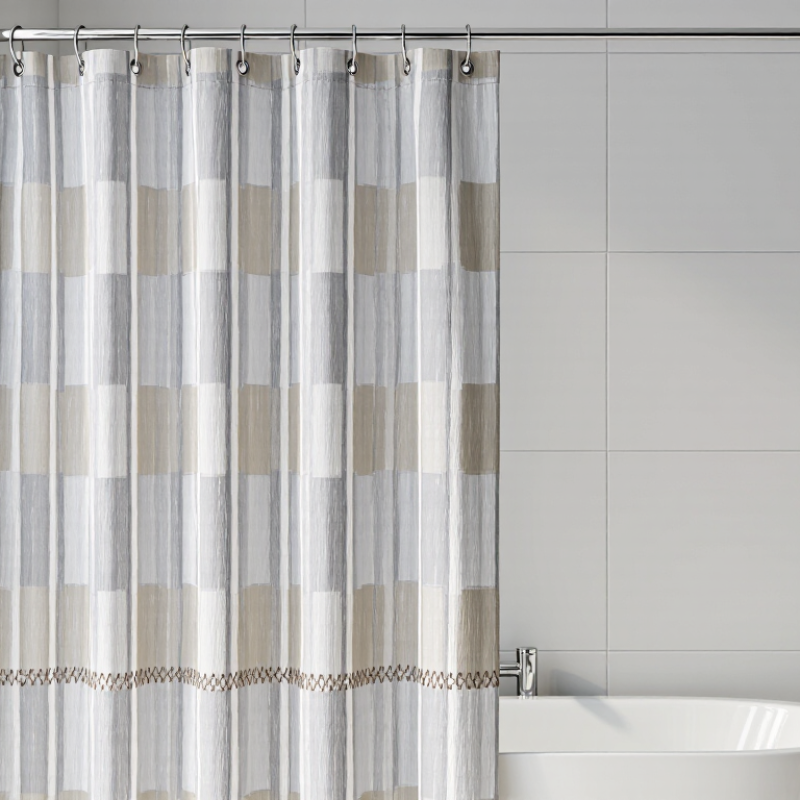
A capable woven shower curtain manufacturer offers more than attractive fabric. It controls yarn selection, loom settings, dyeing, cutting, and finishing. Buyers should request material specifications, production photos, and recent quality records. A reliable factory can explain fabric weight, weave density, shrinkage, and colorfastness in clear language.
Real performance appears after repeated use. The curtain should hang evenly, resist bathroom humidity, and keep its shape after washing. Strong hems matter, especially around metal eyelets and reinforced header tape. Manufacturers should test dimensions, stitching strength, odor, and color migration before shipment. Digital samples save time, but physical samples reveal stiffness, drape, and surface texture better. I have found this difference important during product reviews.
Tips:
Ask for a sample made with the same fabric, hardware, and finishing process as bulk production. Confirm packaging measurements and inspection standards early. Check whether the manufacturer can trace recycled fibers or other claimed materials through documented suppliers. Sustainability claims need evidence. They should not depend on attractive wording alone.
Global buyers also need responsive communication and realistic capacity planning. A manufacturer may offer low prices but struggle with seasonal orders or small revisions. That weakness becomes expensive. No supplier gets every detail right. The best partners admit production risks, propose corrections, and record them. Buyers should review test results, approve a sealed sample, and keep written specifications for every order.
Key Materials and Construction Standards for Woven Shower Curtains
In 2026, woven shower curtain buyers should examine materials before comparing supplier prices.
Polyester remains practical because it dries quickly, resists shrinking, and holds printed patterns well. Cotton offers a softer hand feel, but it absorbs moisture and may need a waterproof liner. Recycled polyester can reduce virgin fiber use, although its softness and color consistency require careful testing.
A reliable curtain usually has balanced yarn density, stable dimensions, and reinforced stress points.
A medium-weight fabric often hangs better than an extremely thin one. However, higher GSM does not automatically mean better performance. I have seen heavy curtains sag because their headers were poorly stitched. Double-fold hems, bartacked top edges, and rust-resistant eyelets improve daily durability. The eyelet spacing should match common hooks without pulling the fabric sideways.
Manufacturers should test colorfastness, shrinkage, seam strength, and water behavior after repeated washing.
Buyers should request pre-production samples and measure them after laundering. Check fabric composition, GSM tolerance, odor, and packaging conditions. Moisture-resistant finishes must be clearly documented and checked against destination-market requirements. No single construction suits every bathroom. A hotel may prefer fast drying, while a home user may value texture and quiet movement. Some suppliers still overstate mildew resistance, so independent testing remains worthwhile.
How Global Buyers Should Evaluate Manufacturers
Choosing a woven shower curtain manufacturer requires more than comparing catalog photos. Global buyers should request physical samples, fabric composition, weight, weave density, and finished measurements. Hold the sample near a window. Uneven light can reveal thin areas or loose threads. Ask how the factory controls shrinkage after washing. A detailed answer shows practical experience.
Tips: Check production records, quality procedures, and independent test reports. Confirm capacity during peak seasons, not only in quiet months. Review stitching around eyelets, hems, and weighted edges. Request a clear inspection standard with measurable defect limits. Also compare packaging details. Damp storage during shipping can damage otherwise good fabric.
Reliable manufacturers explain lead times, minimum order quantities, replacement policies, and communication procedures before receiving payment. They should identify the responsible quality manager and provide dated inspection photos. Factory audits can help, but one visit cannot prove every future shipment will match. Samples may also receive extra attention. This is an uncomfortable, but important, limitation. Buyers should place a controlled trial order and inspect several cartons, not just one piece. Keep records of color, dimensions, odor, stitching, and packaging condition. Consistent documentation supports fair decisions and exposes problems early.
2026 Best Woven Shower Curtain Manufacturers for Global Buyers
How Global Buyers Should Evaluate Manufacturers
This buyer-side 100-point evaluation model prioritizes product quality, material safety, customization, production capacity, compliance, sustainability, and commercial terms when comparing woven shower curtain manufacturers. It is designed for supplier screening without using company or brand data.
Leading Regions and Manufacturer Selection Criteria
For global buyers in 2026, woven shower curtain sourcing depends on region, not only quoted price. China offers broad weaving capacity, flexible customization, and mature export logistics. India is strong in cotton-rich textures, hand-feel development, and decorative patterns. Turkey and Portugal often suit buyers seeking refined finishing and shorter regional routes. Vietnam can support polyester programs and supply diversification. Regional strengths vary between factories. Verify, do not assume.
Selection should begin with the intended bathroom environment. Specify fiber content, fabric weight, weave density, finished width, and hanging-hole construction. Start with samples. Check seam straightness, grommet pull strength, shrinkage after washing, colorfastness, and water behavior. A water-repellent finish is not the same as waterproof fabric. Request recent laboratory reports and confirm the tested material matches production specifications. Review carton dimensions, folding marks, odor, and packaging protection. Small details matter.
A reliable manufacturer should explain its process clearly. Factory records, quality checkpoints, and corrective-action reports reveal more than polished presentations. Confirm minimum order quantities, sampling fees, lead times, and peak-season capacity. Independent audits help, but they cannot replace inspection or pre-shipment checks. Compare at least three suppliers with one written scorecard. This method is imperfect. A lower score may reflect weak communication, while a capable factory may lack polished English. Keep written approvals, retain sealed samples, and test bulk lots when performance is sensitive. Product quality depends on actual use, not promises.
Ordering, Quality Control, and International Shipping Considerations
Selecting a woven shower curtain manufacturer requires more than comparing unit prices. Experienced buyers request a complete tech pack, including fabric composition, GSM, dimensions, color references, seam construction, and packaging details. Confirm the MOQ before sampling. A low MOQ may hide higher setup costs. UNCTAD’s Review of Maritime Transport 2024 states that over 80% of global merchandise trade moves by sea. Therefore, shipping reliability can affect the real product cost more than a small factory discount.
Quality control should cover fabric inspection, shade consistency, stitching density, grommet strength, odor, and final measurements. Use ISO 2859-1 sampling or an equivalent documented inspection plan. A pre-shipment inspection should record defects with photographs and batch numbers. However, a perfect report does not guarantee perfect performance. Curtains may wrinkle after folding, or cartons may absorb moisture during humid transit. WTO trade statistics place global merchandise trade near US$24 trillion in 2023, showing why small documentation errors can create expensive delays across borders.
Tips: Approve a sealed reference sample. Test one washed curtain. Ask for carton drop-test results and moisture protection. Compare FOB, CIF, and DDP quotations carefully. Check the HS classification with a qualified customs adviser. Request shipping schedules, backup ports, and clear responsibility for damaged cartons. Keep 2–3% extra units for replacement needs; this is cautious, but often practical.