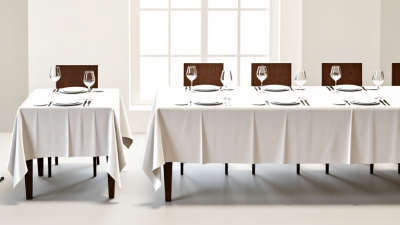
Why Is Tablecloth Sizing Important?
Tablecloth Sizing affects more than appearance. It helps a table look balanced, keeps fabric clear of diners’ laps, and reduces the chance of corners catching on chair arms. A cloth that is too short can look unfinished. One that hangs too low may brush the floor or get tugged during a meal.
The right size depends on the tabletop’s length, width, or diameter, plus the desired drop—the distance fabric hangs over each edge. For a rectangular table, measure the top and add twice the intended drop to both dimensions. For a round table, measure across the tabletop and add twice the drop. Measure the table itself, not a chair or an old cloth that may have stretched. Small details matter.
Use the setting as a guide. A shorter drop often works well for everyday meals, while a longer one can create a more formal look. Still, there is no single drop that suits every room. Heavy fabric may hang differently from lightweight linen, and nearby chairs can make a generous overhang awkward. A tape measure and a quick check with chairs pulled out can prevent that surprise. It is easy to focus only on the table’s dimensions; I would also consider how people move around it. That part is sometimes overlooked.
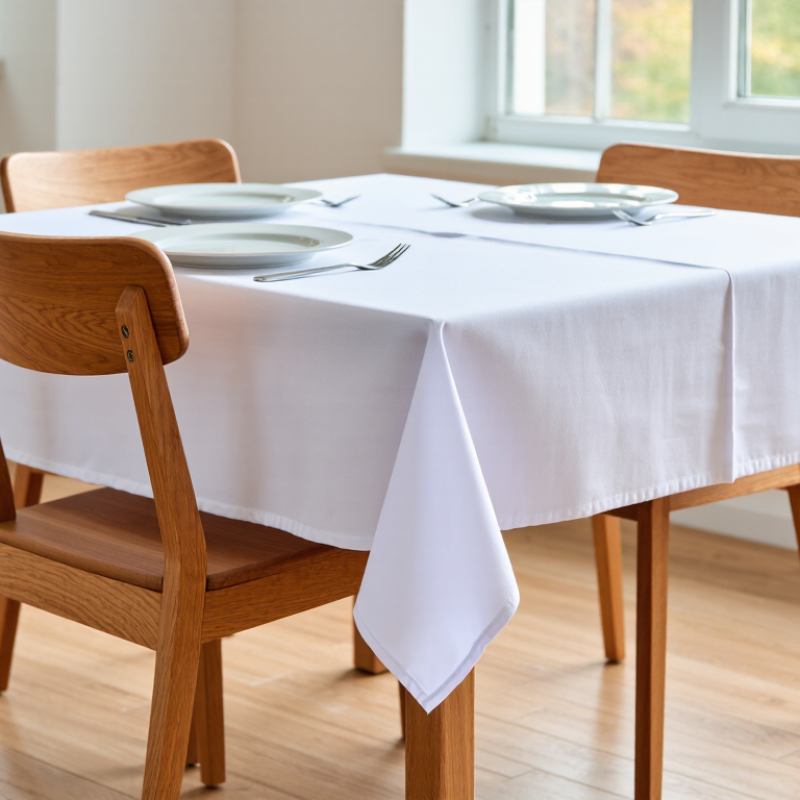
How Tablecloth Size Is Measured
Why Is Tablecloth Sizing Important?
How Tablecloth Size Is Measured
Measure the tabletop’s length and width across the center, keeping the tape flat and straight. For a round table, measure its diameter from edge to edge. Then measure the desired drop: the distance from the tabletop edge to where the cloth should end. Add twice the drop to each tabletop dimension. For example, a 72-by-30-inch table with a 10-inch drop needs a 92-by-50-inch cloth. Simple arithmetic, but a small measuring error can leave one edge noticeably short.
ISO 22198:2006, Textiles—Fabrics—Determination of Width and Length, describes how textile width and length are determined. It’s a useful reference for treating the cloth’s two dimensions separately rather than relying on a product label alone. Measure the cloth laid flat, without pulling or bunching it. If it has a border or shaped corners, check the finished usable dimensions, too. Fabric can shift after washing, so the first measurement may not tell the whole story.
Tips: Measure the table twice, then note the units. Check the cloth’s dimensions against your calculation before ordering. I still recheck the drop; chairs and floor clearance can make a “correct” size feel awkward.
How to Match a Tablecloth to Table Dimensions
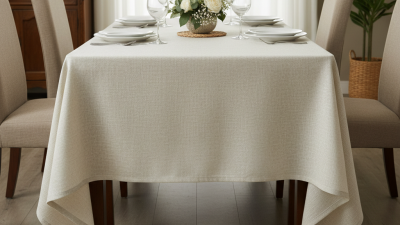
A well-sized tablecloth should cover the tabletop and hang evenly without dragging across chairs or the floor. Measure the table’s length and width, then add twice your preferred drop to each measurement.
For example, a 36-by-60-inch table with a 10-inch drop needs a cloth about 56 by 80 inches.
Measure twice. Small details matter.
Tips: For a round table, measure its diameter and add twice the drop. For an oval table, use its longest length and widest width. An 8- to 12-inch drop often works for everyday dining, but chair height and room style can change what looks right. Check the cloth’s listed dimensions, not just its size label.
Shape matters, too. A square cloth can suit a round table if its corners fall clear of the chairs, while a rectangular cloth usually follows a rectangular table more neatly. If the table has a leaf, measure it both open and closed; one cloth may not fit both settings well. It is tempting to choose a longer drop for a polished look, but fabric brushing guests’ laps can become annoying. Lay a tape measure over the edge to preview the drop before buying.
How Tablecloth Drop Affects Appearance and Function
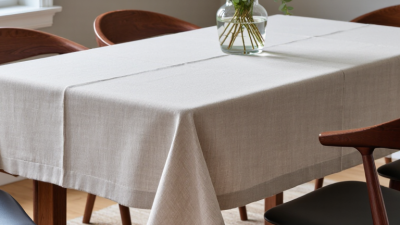
A tablecloth’s drop is the fabric hanging beyond the tabletop. It changes both the room’s look and how comfortably guests can sit. A short drop feels neat and practical, especially where chairs move often. A longer drop creates a softer, more formal line. But extra fabric can brush laps, catch on chair legs, or drag across the floor. Small details matter.
Measure the table before choosing cloth dimensions. ASTM D3774-18(2023), a textile-industry test method, specifies procedures for measuring fabric width; accurate measurements matter because a few inches change the finished drop. For example, a 60-inch cloth on a 30-inch round table leaves a 15-inch drop on each side. A 90-by-132-inch cloth on a 30-by-72-inch table creates a 30-inch drop around the edges. Those are calculated examples, not universal style rules. Check the table’s actual measurements, including any leaves or thick edging.
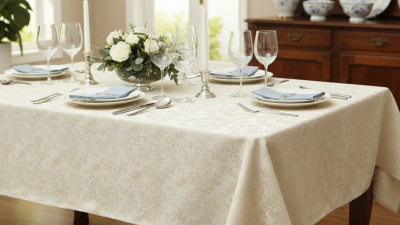
For daily dining, a drop around 8 to 12 inches often leaves chair seats accessible. Formal settings may use longer drops, sometimes near the floor. Still, “formal” is not always functional. A floor-length cloth can snag when someone pulls out a chair. I’ve found that checking one chair in place catches problems a tape measure misses. Then check again; chairs rarely sit perfectly straight.
Why Is Tablecloth Sizing Important?
How Tablecloth Drop Affects Appearance and Function
A longer drop creates a more formal look but leaves less clearance beneath the cloth. For a table that is 76 cm high, approximate floor clearance is calculated as 76 cm minus the drop. These drop lengths are illustrative planning options; measure your table and chairs before choosing a cloth.
How Table Shape and Use Influence Sizing
Why Is Tablecloth Sizing Important?
How Table Shape and Use Influence Sizing
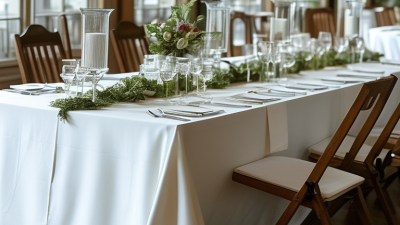
A tablecloth should fit the table’s shape and suit the way people use it. For a rectangular dining table, measure the length and width, then add twice the desired drop to each measurement. A 72-inch table with a 10-inch drop needs a cloth about 92 inches long. Round tables need the same approach, using the tabletop diameter. Measure the widest point, not the table’s base.
The right drop depends on the setting. A short drop can work well for everyday meals, where cloth edges might catch on chairs or knees. For a formal dinner, a longer drop creates a softer look, but check that it stays clear of guests’ laps. Square tables are easy to overlook; a round cloth may fit, but its corners can hang unevenly. I have found that measuring only once is easy to regret, especially with older tables that are not perfectly square.
Tips: Measure the tabletop, then check your numbers again. Note whether leaves or extensions will be used, and measure the expanded table too. If the cloth is for outdoor use, allow room for movement and consider how wind may lift the edges. A little extra length is not always better.
Why Is Tablecloth Sizing Important? - How Table Shape and Use Influence Sizing
A tablecloth’s finished size depends on the tabletop dimensions and the desired drop—the distance the cloth hangs over each edge. The examples below use a 15-inch drop, a common choice for a generous hang; measure your table and check chair clearance before buying.
| Table shape and use |
Example tabletop size |
Suggested drop |
Approximate cloth size |
Sizing note |
| Rectangular banquet table; dining or events |
30 × 72 in |
15 in on each side |
60 × 102 in |
Add twice the drop to both tabletop dimensions: 30 + 30 and 72 + 30. |
| Round table; meals or conversation |
48 in diameter |
15 in all around |
78 in diameter |
Add twice the drop to the tabletop diameter: 48 + 30. |
| Square table; compact dining or card games |
36 × 36 in |
15 in on each side |
66 × 66 in |
A square cloth keeps the overhang even on all four sides. |
| Oval table; everyday dining |
36 × 72 in (length × width) |
15 in around the edge |
About 66 × 102 in |
These are bounding dimensions; an oval-shaped cloth may fit the curved ends more neatly than a rectangular one. |
| Any shape; casual meals and easy seating |
Measure the tabletop |
6–8 in |
Each tabletop dimension + 12–16 in |
A shorter drop is less likely to brush seated guests’ legs or interfere with chairs. |
| Any shape; formal setting or a longer drape |
Measure the tabletop and its height |
Choose a drop to suit the occasion |
Each tabletop dimension + twice the chosen drop |
For a floor-length look, use the table height as the drop and check that the cloth will not create a tripping hazard. |
Quick rule: For rectangular and square tables, cloth length or width = tabletop measurement + 2 × desired drop. For a round table, cloth diameter = tabletop diameter + 2 × desired drop. Actual finished sizes can vary, so compare the calculated size with the cloth’s listed dimensions.
What Problems Can Incorrect Tablecloth Sizing Cause?
Incorrect tablecloth sizing can make a dining area look untidy and interfere with everyday use. A cloth that is too small may leave table edges exposed, especially when guests sit down and pull their chairs closer. It can also shift during a meal, leaving one side with little coverage.
Small details matter.
A cloth that hangs too low creates different problems. Extra fabric can brush against people’s knees, catch on chair arms, or get trapped beneath chair legs. That can cause spills when someone stands up quickly. On long tables, an uneven drop may also make the setting look lopsided, even when the table itself is level.
The right size depends on the tabletop dimensions and the drop you want on each side. Measure the table rather than guessing from its seating capacity; two tables for six can have very different shapes. Include any extensions if the table is often opened for guests. Even careful measuring can miss a detail, such as a thick tabletop edge or chairs that sit unusually close. I would check the fit with chairs in place, too. A cloth that looks fine on an empty table may feel cumbersome once everyone sits down. Cleaning can be less convenient when excess fabric drags across the floor or collects crumbs along its folds.