Why Choose a Floral Shower Curtain for Modern Bathrooms?
A modern bathroom can feel polished yet strangely empty. Clean tiles, chrome fixtures, and pale walls often create a beautiful but forgettable space. A Floral Shower Curtain introduces pattern, softness, and a more personal visual rhythm without requiring major renovation. Its flowers can echo a nearby plant, match warm towels, or soften the hard edges of glass and ceramic.
Interior design authority Albert Hadley once said, “The essence of interior design will always be about the people and how they live.” That principle explains why a Floral Shower Curtain can work so well. It reflects personality through color and scale. Small botanical prints may suit compact bathrooms, while oversized blossoms can create a confident focal point. The fabric also affects the experience. A tightly woven polyester curtain dries quickly and resists daily splashes, while a cotton blend may feel richer but need more careful washing.
Details matter.
I have found that bright florals can look lively in daylight, then appear overwhelming under cool white bulbs. That is an easy mistake. Testing a fabric sample beside the vanity can prevent it. Waterproofing, reinforced grommets, and a washable liner also make the choice more practical. Beauty alone is not enough.
This guide explores how floral patterns support modern bathroom design, where they can fail, and how to choose one with lasting appeal. The best option may not be the most dramatic. Sometimes, a muted green stem and a quiet cream background create the stronger room.
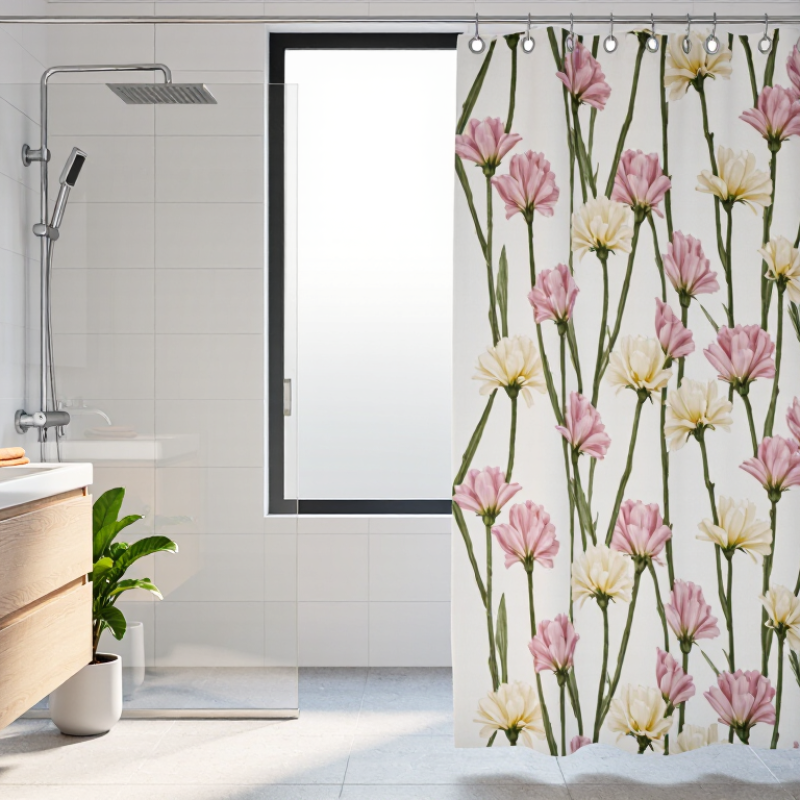
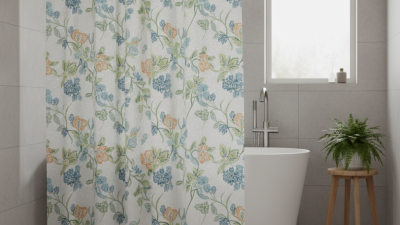
A floral shower curtain is a washable or replaceable bathroom panel printed with flowers, leaves, or botanical patterns. Its core design features include water resistance, reinforced eyelets, durable hems, and a balanced visual rhythm. Large blooms create a stronger focal point, while small vines make compact bathrooms feel calmer. Soft sage, cream, and dusty blue usually support modern surfaces better than overly bright colors.
The design also needs practical discipline. A curtain should fit the shower opening without dragging on the floor. Standard sizes often measure about 72 by 72 inches, but measuring remains essential. Uneven hems can collect water and develop stains.
The U.S. Environmental Protection Agency recommends indoor humidity between 30% and 50%, which supports better bathroom comfort and mold control. Ventilation still matters more than decoration.
Industry reports show continuing interest in bathroom upgrades. The 2024 U.S. Houzz Bathroom Trends Study identifies natural influences and personalization as important renovation directions. Floral patterns answer both needs without permanent construction.
Grand View Research also describes the global shower curtain market as a growing home-furnishing segment, supported by replacement demand and interior styling. These figures do not prove every floral design works. A dense print may look elegant online but feel crowded beside patterned tiles. Test a fabric swatch near the mirror first. Small details matter.
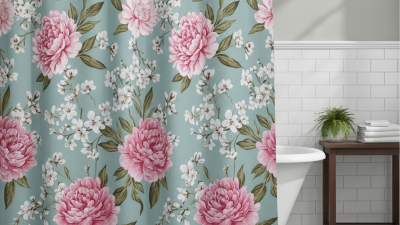
Floral patterns can make a modern bathroom feel softer without losing its clean structure. In my bathroom styling experience, the pattern works best when its colors repeat elsewhere. A pale green leaf can echo a painted cabinet. Small coral flowers can connect with towels or ceramic accessories. This creates visual rhythm rather than random decoration. Light matters too. In a bathroom with a narrow window, muted flowers reflect brightness more gently than dark, crowded designs. The shower curtain becomes a moving wall. It can also make a plain white space feel warmer.
Scale changes the room’s perceived size. Large blooms create a bold focal point, while smaller flowers can make limited walls feel busier. I once chose an oversized floral print for a compact bathroom. The design looked attractive online, but it overwhelmed the mirror and reduced the sense of space. A smaller pattern would have been more balanced. That mistake still influences my recommendations.
Modern aesthetics depend on restraint. A floral curtain should usually have one clear visual role. Pairing it with simple tiles, brushed metal, and uncluttered storage keeps the room calm. Fabric weight also affects appearance. A heavier, water-resistant curtain hangs more neatly and shows the print clearly. Check the hem and stitching before buying. A beautiful pattern loses impact when it curls or fades after repeated washing. Floral designs are expressive, but personal taste and natural light should guide the final choice. Oqartussat
A floral shower curtain can soften a modern bathroom without making it feel overly decorative. The material, size, and construction deserve more attention than the pattern. Polyester is lightweight, dries quickly, and usually handles frequent washing well. Cotton feels warmer and more substantial, but it absorbs water and needs careful drying. Vinyl blocks splashes effectively, although it can feel less breathable and may develop creases after storage.
Measure the shower area before choosing a size. A common curtain is about 72 by 72 inches, but wider tubs may need extra fabric for fuller coverage. Measure from the rod to the floor, then leave one or two inches of clearance. A curtain that drags can collect moisture and dirt. One that hangs too high may let water escape. I once trusted a standard size without measuring. It looked acceptable, but the lower edge barely covered the tub.
Functional details affect daily use. Reinforced buttonholes reduce tearing around the hooks, while a weighted hem helps the curtain stay in place. Magnets can improve stability on metal tubs. A washable curtain is useful, especially in poorly ventilated bathrooms. Check the care label and drying instructions. A separate liner may offer better splash protection, but it also adds another item to clean. Light-colored floral designs can show water marks quickly, so darker backgrounds may be more forgiving. Small flaws matter. They often appear after repeated washing, not on the first day.
| Evaluation Dimension | Common Option or Standard | Typical Specification | Practical Benefits | Points to Evaluate | Overall Suitability |
|---|---|---|---|---|---|
| Curtain Material | Polyester fabric | Water-resistant woven fabric, commonly 100% polyester | Lightweight, quick-drying, easy to wash, and available in detailed floral prints | Check fabric density, colorfastness, hem quality, and care instructions | Excellent |
| Curtain Material | PEVA or EVA | Chlorine-free plastic; often used as a waterproof liner | Provides strong water resistance and helps protect the decorative outer curtain | May offer less textile softness; inspect thickness, odor, and flexibility | Very Good |
| Curtain Material | Cotton or cotton blend | Natural-fiber textile, sometimes blended with polyester | Soft hand feel, breathable appearance, and a more relaxed decorative style | Usually needs more careful drying and may absorb more moisture than polyester | Good |
| Standard Width | 72 inches (183 cm) | Approximately 72 in W × 72 in H | Fits many standard bathtub and shower installations | Measure the rod length and allow enough fullness for natural folds | Most Versatile |
| Extended Width | 84 inches (213 cm) | Approximately 84 in W × 72 or 84 in H | Creates fuller coverage and works well with wider shower openings | Requires a longer rod and adequate wall clearance | Very Good |
| Extra-Long Size | 72 inches wide × 84 inches high | Approximately 183 cm W × 213 cm H | Suitable for taller installations and bathrooms with higher curtain rods | Keep the bottom several centimeters above the floor to reduce moisture exposure | Best for Tall Setups |
| Top Header | Metal-reinforced buttonholes | Usually 10 to 12 hanging holes on a standard curtain | Supports smooth movement and helps distribute the curtain’s weight evenly | Look for rust-resistant eyelets and reinforced stitching around each hole | Recommended |
| Hanging System | Plastic or metal curtain rings | Hooks or rings compatible with the rod diameter | Makes removal easier for cleaning and allows the floral pattern to hang evenly | Choose corrosion-resistant hardware for humid bathroom conditions | Recommended |
| Water Management | Weighted bottom hem | Integrated weights or a weighted tape along the lower edge | Helps reduce billowing and keeps water inside the shower area | Confirm that the weights are securely enclosed and do not create sharp edges | Very Good |
| Liner Compatibility | Separate waterproof liner | Inner liner positioned between the user and the decorative curtain | Improves splash protection and extends the life of the floral outer curtain | Match the liner width and height; leave enough airflow to discourage mildew | Highly Practical |
| Maintenance | Machine-washable polyester | Cold or warm wash according to the care label; low-temperature drying is typical | Convenient for regular cleaning and helps maintain a fresh bathroom appearance | Avoid high heat if the fabric includes printed details or a coated finish | Excellent |
| Drying Performance | Quick-drying construction | Light to medium-weight fabric with good air circulation | Reduces prolonged dampness and supports better bathroom hygiene | Spread the curtain fully after showering and provide ventilation when possible | Very Good |
| Pattern Scale | Small to medium floral print | Repeated botanical motifs with moderate visual density | Adds color and texture without overwhelming compact or minimalist bathrooms | Coordinate the dominant flower colors with towels, tiles, or wall accents | Best for Most Bathrooms |
| Visual Balance | Muted botanical palette | Soft greens, neutrals, blues, or warm pastel tones | Introduces natural character while maintaining a calm modern atmosphere | Use restrained accessories when the curtain has a large or high-contrast pattern | Excellent |
| Safety and Durability | Mildew-resistant finish or liner | Surface treatment designed to slow mildew growth; not a substitute for cleaning | Can be useful in humid bathrooms when combined with airflow and routine washing | Review care claims carefully and avoid relying on treatment alone for hygiene | Useful with Care |
Why Choose a Floral Shower Curtain for Modern Bathrooms?
Coordinating a floral shower curtain with bathroom colors requires more than matching one flower. Start with the room’s largest fixed surfaces, such as tile, vanity wood, and flooring. Choose one floral color as an accent, then repeat it through towels or a small ceramic tray. Soft sage flowers suit warm white walls and brushed nickel fixtures. Deep blue petals can balance pale gray tile and matte black hardware. Keep the metal finish consistent when the pattern is already visually active.
A floral curtain can also soften the hard lines of a modern bathroom. This matters because the 2024 U.S. Houzz Bathroom Trends Study reported a median major-remodel spend of about $35,000, making flexible decorative updates valuable between renovations. I have found that a curtain sample beside the faucet works better than judging colors online. Screens distort warm tones. A physical test is safer.
Practical details still matter. The U.S. Environmental Protection Agency states that WaterSense-labeled bathroom faucets use at least 20% less water than standard models. Pairing efficient fixtures with a washable polyester or fabric curtain supports both appearance and daily use. Floral patterns can feel crowded beside ornate hardware, though. I once overmatched both, and the room looked restless. A quieter curtain would have worked better. Consider scale, daylight, and grout color before choosing the final design.
The 60–30–10 decorating rule provides a practical way to coordinate a floral shower curtain with bathroom colors and fixtures: use a dominant neutral, a secondary curtain color, and a smaller fixture or accent color.
A floral curtain works best when its background or largest floral tone matches the 60% base color, while a repeated flower or leaf shade supports the 30% secondary color. Brushed brass, chrome, or matte black fixtures can then provide a balanced 10% accent.
Why Choose a Floral Shower Curtain for Modern Bathrooms?
Maintenance, Durability, and Sustainable Choice Considerations
A floral shower curtain can soften hard bathroom surfaces without adding permanent décor. In daily use, performance matters more than appearance. Choose tightly woven polyester or responsibly sourced natural fabric with reinforced hems and rust-resistant grommets. The curtain should dry quickly after each shower. That small detail reduces mildew risk and cleaning effort.
Washable fabric is often more practical than disposable plastic. Follow the care label, wash with mild detergent, and air-dry fully. Do not rely on floral patterns to hide stains. They can. That is not the same as cleanliness. A 2023 report from the United Nations Environment Programme estimates textiles create 2–8% of global greenhouse-gas emissions, so frequent replacement deserves careful thought. A durable curtain used for several years may reduce material demand, although its full impact depends on production and disposal.
Sustainability claims also need scrutiny. Recycled polyester can reduce reliance on virgin materials, but it remains a synthetic fiber. Washing may release microfibers, and recycling systems for household textiles remain limited. The European Environment Agency reported in 2024 that textile waste prevention and collection still vary widely across Europe. Use a low-temperature wash, avoid unnecessary washing, and consider a microfiber-catching laundry bag. It is not perfect. No single curtain is. Check whether the liner can be replaced separately, because keeping the outer curtain in service may prevent needless disposal. EPA WaterSense data also shows that efficient showerheads reduce water use, helping the curtain dry faster and lowering bathroom moisture.