Choosing the best Vinyl Shower Curtains from China requires more than comparing attractive patterns and low prices. A curtain may look thick in photographs, yet feel flimsy beside a wet bathtub. The details matter: material density, reinforced grommets, accurate sizing, odor, water resistance, and stitching quality. PVC remains common, while PEVA offers a different balance of softness, weight, and environmental considerations. Neither option is automatically perfect.
Bathroom-textiles consultant Mia Chen explains, “The best curtain is not the cheapest one; it is the one that stays stable, clean, and useful after repeated exposure to water.” Her point is practical. Buyers should request material specifications, sample pieces, production photographs, and inspection records before placing larger orders. They should also check whether the supplier can maintain consistent color, dimensions, and grommet placement across batches.
Small details reveal factory discipline.
A useful evaluation includes 72-inch or custom measurements, hem quality, packaging protection, and washing or wiping instructions. Ask how the factory tests mildew resistance and whether claims are supported by credible documentation. A curtain with a strong plastic smell may raise concerns, even if its print looks impressive. Certification requirements can also differ by destination, so buyers should confirm current standards with qualified professionals.
No sourcing decision is flawless. Samples can perform better than mass production. Colors may shift under bathroom lighting. Even experienced importers sometimes overlook hook strength. This guide examines Chinese suppliers, construction choices, pricing factors, and quality checks to help readers make a more careful decision. The goal is not the most decorative curtain. It is dependable performance with fewer unpleasant surprises.
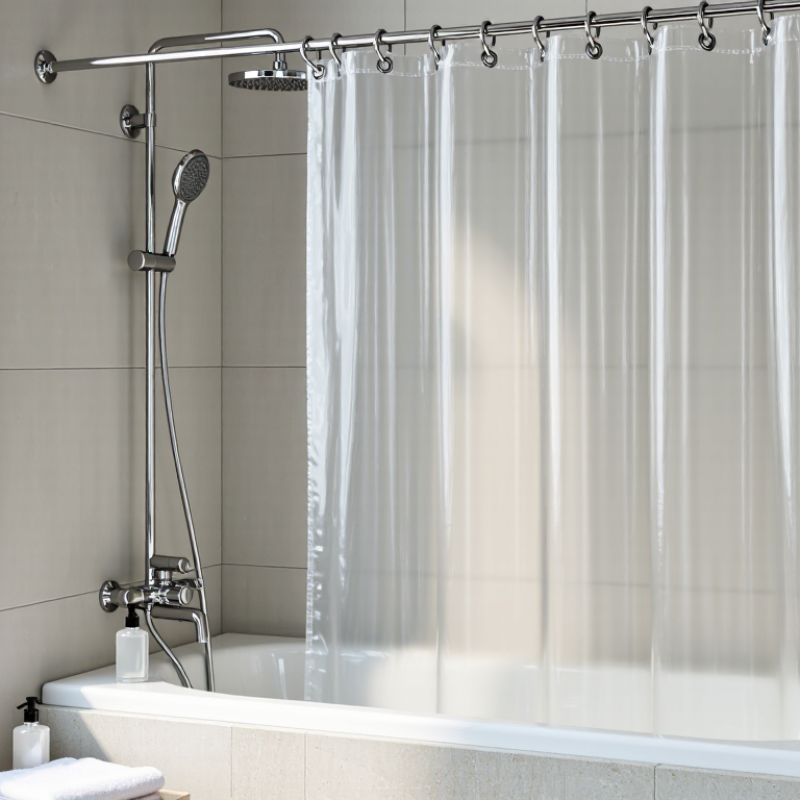
Vinyl shower curtains are flexible waterproof panels, usually made from PVC. They block splashing and dry quickly after use. Unlike fabric curtains, they do not need frequent machine washing. A smooth surface can be wiped with mild soap and a soft cloth. Many designs include reinforced holes, weighted hems, and rust-resistant metal or plastic rings.
Products from China are often chosen for their broad manufacturing experience and flexible production capacity. Suppliers can offer different thicknesses, transparent windows, printed patterns, and custom dimensions. Some factories also support material testing, stitching checks, and packaging adjustments for overseas buyers. From practical sourcing experience, clear specifications matter more than attractive product photos. Ask about vinyl thickness, odor control, hem strength, grommet quality, and water resistance. Request samples before placing a large order. A sample may reveal a sharp smell or weak stitching that photos hide.
Tips: Choose a curtain with a reinforced top edge and evenly spaced grommets. Check whether the vinyl feels flexible, not brittle, in a cool room. Ask for test records and inspection photos when available. Low prices can be useful, but they sometimes reflect thinner material or less careful finishing. I have found that small defects often appear around the hem first. That detail deserves attention. If the curtain will serve hotels or rental properties, confirm cleaning requirements and packaging durability before purchase.
When choosing vinyl shower curtains from China, material quality deserves more attention than printed patterns. PVC offers strong water resistance and a firm drape, but lower-grade sheets may release a sharp plastic odor. PEVA is a chlorine-free alternative often chosen for lighter odor and softer handling. However, “eco-friendly” should not be accepted without supporting documentation. Ask for the exact material composition, thickness, and recent laboratory test reports.
Thickness around 0.15 to 0.20 millimeters usually balances flexibility and durability for daily home use. A reinforced header reduces tearing around the holes, while rust-resistant metal eyelets support repeated hanging. Weighted hems help the curtain stay close to the bathtub, especially when ventilation creates airflow. Magnets can help, but weak ones become useless after several washes. I once focused on thickness alone. That was a mistake. A thick curtain with poor stitching still fails quickly.
Check the dimensions before ordering samples. A common curtain may measure 72 by 72 inches, but bathrooms vary. Request a physical sample and inspect its smell, surface uniformity, stitching, and hole alignment. Rub the surface with a damp white cloth; excessive color transfer suggests weak finishing. Supplier communication also matters. Reliable factories should explain production tolerances, packaging methods, and quality-control steps clearly. Ask how rejected pieces are handled. Small details reveal more than polished catalog images.
| Material / Construction | Typical Thickness | Water Resistance | Odor and Flexibility | Best Use | Important Buying Checks |
|---|---|---|---|---|---|
| PVC vinyl film | Approximately 0.10–0.30 mm | Excellent when seams, hems, and eyelets are properly finished | Durable and relatively stiff; odor depends on plasticizers, inks, and processing | Budget-friendly liners and heavier-duty shower curtains | Ask for thickness tolerance, plasticizer compliance, odor testing, and smooth or embossed surface options |
| PEVA film | Approximately 0.10–0.20 mm | Excellent for normal bathroom use | Generally softer and lower-odor than conventional PVC; performance varies by formulation | Lightweight, lower-odor liners and transparent or colored designs | Verify PEVA composition, thickness, tensile strength, odor level, and restricted-substance test reports |
| EVA film | Approximately 0.10–0.25 mm | Very good; flexible film can provide effective splash protection | Soft and flexible; may feel less rigid than thicker PVC | Soft-touch liners and curtains requiring easy folding | Check film uniformity, tear resistance, heat-sealed hem quality, and compatibility with printed designs |
| TPU film | Approximately 0.15–0.30 mm | Excellent, with strong flexibility and abrasion resistance | Flexible and resilient; usually positioned as a premium material | Premium, reusable curtains where durability and soft handling matter | Confirm TPU grade, yellowing resistance, hydrolysis resistance, and higher material cost |
| Textile outer curtain with vinyl or PEVA liner | Liner commonly 0.10–0.20 mm | Very good when the liner overlaps the tub or shower base correctly | More decorative; textile may drape better while the liner provides splash protection | Residential bathrooms, hospitality interiors, and decorative collections | Check liner attachment, fabric weight, wash-care instructions, mold-resistance claims, and colorfastness |
| Feature | Recommended Specification or Detail | Why It Matters | How to Verify It |
|---|---|---|---|
| Finished dimensions | Confirm finished width and length after hemming; allow adequate overlap at the sides | Prevents water escaping around the edges | Approve a pre-production sample and measure finished dimensions |
| Top header and eyelets | Reinforced header with corrosion-resistant metal or durable plastic eyelets | Reduces tearing and improves smooth movement on the rod | Inspect reinforcement width, eyelet alignment, pull strength, and corrosion test results |
| Hem and weighted bottom | Double-stitched or heat-finished hem; optional non-toxic weighted tape or magnets | Helps the curtain hang straight and limits billowing | Check hem continuity, weight distribution, and absence of sharp or exposed components |
| Surface and finish | Smooth, matte, frosted, embossed, or printed finish according to the design brief | Affects appearance, cleanability, light transmission, and fingerprint visibility | Review samples under bathroom lighting and test wiping with a mild cleaner |
| Low odor | Specify an acceptable odor level and require testing on finished goods | Odor can be noticeable in small, poorly ventilated bathrooms | Request an independent VOC or odor assessment where required by the market |
| Restricted substances | Use material declarations and applicable chemical-compliance testing for the destination market | Supports regulatory compliance and safer consumer use | Request current third-party reports for the exact material, color, print, and production batch |
| Mildew and cleaning performance | Prefer quick-drying surfaces and clearly stated cleaning instructions | Regular drying and cleaning help reduce buildup in humid bathrooms | Evaluate washability, stain resistance, and any antimicrobial claim through documented testing |
| Packaging and logistics | Use protective folding, moisture-resistant inner packaging, and carton drop protection | Reduces creasing, contamination, and damage during international transport | Approve a packed sample and conduct carton inspection before shipment |
Comparing Chinese manufacturers requires more than checking catalog photos. Request a physical sample before discussing large orders. Inspect the vinyl surface under strong light. It should look even, without bubbles, cloudy patches, or sharp chemical odors. Measure the finished width and length yourself. Small cutting differences can affect installation.
Ask about vinyl thickness, fabric backing, hem construction, and rust-resistant grommets. A thicker curtain may hang better, but thickness alone does not prove quality. Check whether the bottom hem contains enough weight to prevent curling. Pull the grommets firmly. Weak attachment points often reveal poor production control. Request test reports for material safety, colorfastness, and water resistance. Verify report dates and testing laboratories.
Reliable manufacturers should explain their inspection process clearly. Ask how they control batch color, packaging moisture, and carton damage. Factory photographs help, but an independent audit provides stronger evidence.
Communication also matters. Can the sales team answer technical questions without vague promises? Can they send replacement samples when measurements change?
Price comparisons need caution. A low quotation may exclude packaging, testing, or custom tooling. An expensive sample may still hide inconsistent mass production. I would compare three samples using the same checklist. I would also repeat the water test after several days. One test is not enough. Manufacturing quality can vary between batches, and that uncomfortable possibility deserves attention.
When sourcing vinyl shower curtains from China, check quality beyond photographs. Ask for the PVC film thickness, typically measured in millimetres, and inspect seam strength, eyelet attachment, and edge curling. A practical sample test includes repeated hanging, warm-water exposure, and wiping with a mild bathroom cleaner. The curtain should remain flexible without sticky residue or sharp odour. Low odour helps, but it proves little.
Safety documents deserve closer attention. Request an independent laboratory report covering restricted phthalates, lead, cadmium, and relevant heavy metals. For products sold in the European market, the European Chemicals Agency states that four phthalates, including DEHP and DIBP, are restricted at 0.1% or above in plasticised materials under REACH. Ask whether testing examined the finished curtain, not only the raw film. That distinction is easy to miss. ISO 105-A02 colourfastness testing can also reveal whether the printed surface fades or transfers during cleaning.
Environmental claims need evidence, not green wording. The United Nations Environment Programme’s 2023 Turning off the Tap report says plastic pollution could be reduced by 80% by 2040 through reuse, recycling, and improved product design. A vinyl curtain is rarely a strong circular product, so request recycled-content evidence, manufacturing waste records, and packaging details. ISO 14001 certification may show an environmental management system, but it does not prove that one curtain is recyclable. I would also compare PVC formulations carefully; the cheapest sample may hide higher replacement and disposal costs.
What Are the Best Vinyl Shower Curtains from China?
Selecting a vinyl shower curtain starts with measurable details, not attractive product photos. I check thickness, finished size, hem quality, rust-resistant eyelets, and odor after unpacking. A sample should hang for several days in a ventilated room. This simple test can reveal curling, weak seams, or persistent plastic odor.
The U.S. Environmental Protection Agency reports that indoor pollutant levels can be two to five times higher than outdoor levels. Therefore, ask suppliers for material safety data and independent testing for phthalates, heavy metals, and restricted substances. ISO 9001 certification may show process control, but it does not replace product testing. Request a recent report linked to the exact curtain material. That detail is often missed.
When ordering, confirm dimensions, color tolerance, carton protection, minimum order quantity, and inspection timing. A pre-shipment inspection can check stitching, eyelet spacing, and random carton samples. Written specifications prevent expensive misunderstandings. I would also compare total landed cost, not only the factory price. Freight and damaged goods can change the result.
Tips: Wash the curtain with mild soap before use. Keep it fully spread after each shower. Dry the lower hem and improve bathroom ventilation. Replace it when cracking, mildew, or a permanent odor appears. The OECD reported that only about 9% of global plastic waste was recycled between 1950 and 2015. Ask about take-back or responsible disposal options. Vinyl lasts well, but disposal still deserves more attention.