What Are the Best Vinyl Shower Curtains for 2026?
The best Vinyl Shower Curtains for 2026 are not simply the thickest or cheapest options. They should fit your tub, hang securely, and handle everyday splashes without becoming difficult to clean. A curtain that looks sturdy online may feel stiff in a small bathroom, so material and construction matter. Check the listed dimensions, reinforced header, grommet spacing, and whether magnets or weights help keep the bottom in place.
Details matter.
This guide compares practical features, including opacity, surface texture, care instructions, and compatibility with a separate liner. Vinyl commonly refers to PVC, but product descriptions can be vague; check the material information rather than relying on labels alone. Also review the manufacturer’s cleaning guidance and any care or warranty details before buying. Strong odors, color accuracy, and long-term durability can vary between products, and online photographs cannot settle every question. That trade-off is real. A lower price may suit a guest bathroom, while a frequently used shower may justify sturdier construction. There is no single curtain that works best for every home. Our selections focus on clear specifications and useful everyday details, while noting where product claims deserve a closer look. Use the comparisons to find a curtain that fits your space, routine, and budget—not just the product with the most polished listing.
What Vinyl Shower Curtains Are and How They Work
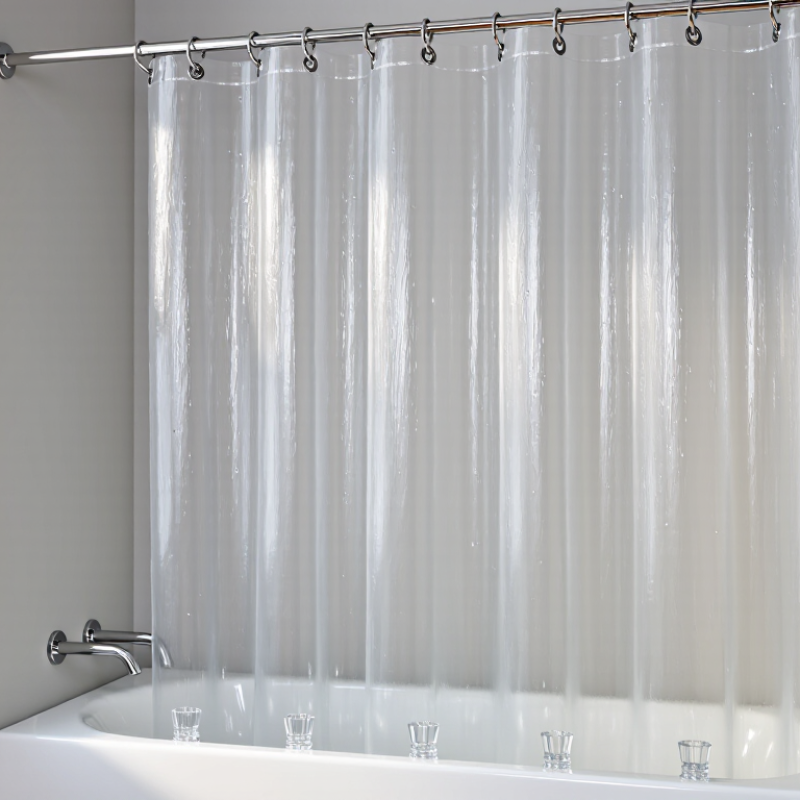
Vinyl shower curtains are flexible plastic panels designed to limit water splashes beyond the tub or shower. Many are made from PVC, while similar-looking curtains may use other materials; check the care label rather than assuming. The surface does not absorb water like fabric. Beads gather and run down toward the tub. Simple, but not foolproof.
A curtain works best when it hangs inside the tub, with its lower edge near the basin and enough width to cover the opening. Grommets hold it on the rings, while weighted hems can help reduce billowing. Still, gaps near the wall or a curtain pulled too far aside can let water escape. Vinyl is not a sealed barrier. After showering, spread it open so air can reach both sides; trapped moisture can encourage mildew on nearby surfaces. A new curtain may also have a noticeable odor, which can fade with airing.
Tips: Rinse away soap residue and wipe the hem regularly. Follow the label’s cleaning instructions, and replace a curtain that becomes brittle, cracked, or persistently musty. Do not assume every vinyl curtain can go in a washing machine.
Key Features to Compare in Vinyl Shower Curtains
When comparing vinyl shower curtains for 2026, start with fit, thickness, and construction. Measure the tub and rod before buying; a curtain that is too short can leave a wet strip of floor. Check the listed thickness, but don’t treat a higher mil number as a guarantee of durability. Grommets, reinforced hems, and flexible edges matter too. A heavy curtain may hang neatly, yet feel awkward to slide each morning. Small details matter.
Consider odor and upkeep. The U.S. Environmental Protection Agency reports that indoor concentrations of some pollutants can be two to five times outdoor levels, so air out a new curtain in a ventilated room if its smell lingers. That figure applies to indoor air broadly, not specifically to shower curtains. Look for clear care instructions and a surface that wipes clean without harsh scrubbing. Vinyl can be practical, but it is not maintenance-free.
Tips: Let the curtain dry fully between showers, and check the bottom edge for residue. The EPA advises drying water-damaged areas within 24–48 hours to help limit mold growth; that guidance concerns damp building materials, but it reinforces the value of prompt drying. I still find product claims hard to compare when test methods are not clearly stated. Check dimensions and care details before trusting “heavy-duty” wording.
Safety, Durability, and Environmental Considerations
For a vinyl shower curtain in 2026, safety starts with clear material information and sensible use. Look for care instructions and disclosures about added chemicals. A strong “new plastic” smell is a reason to air the curtain out, but smell alone cannot confirm safety. CHEJ’s 2008 report, PVC Shower Curtains: A Toxic-Free Home?, described laboratory testing that detected 108 volatile organic compounds from tested curtains. That older test does not represent every product sold today. Still, it supports ventilating the bathroom and airing out a new curtain before use. Not a guarantee.
Durability depends on everyday details: reinforced holes, sturdy hems, and a surface that dries between showers. Rinse away soap residue and follow the care label; replace a curtain when it cracks, becomes brittle, or develops persistent mildew. Environmental trade-offs matter, too. The U.S. EPA’s Advancing Sustainable Materials Management: 2018 Fact Sheet reported 35.7 million tons of plastic waste, equal to 12.2% of U.S. municipal solid waste. That figure covers plastics broadly, not shower curtains specifically, but it shows why disposal deserves attention. Many local curbside programs do not accept flexible PVC.
Tips: Hang the curtain fully open after bathing, and check local disposal guidance before replacing it. Small habits help, though they cannot solve PVC’s end-of-life challenges.
What Are the Best Vinyl Shower Curtains for 2026?
A qualitative comparison of common shower-curtain materials
Scores are indicative material-level ratings on a 1–5 scale, not laboratory measurements or a product ranking. Vinyl (PVC) is water-resistant and generally durable, but formulations vary and some products may contain plasticizers. PEVA/EVA avoids PVC but is not automatically impact-free; polyester is not inherently waterproof and may need a water-resistant finish. Check product disclosures, care instructions, and applicable safety information before buying.
How to Install, Clean, and Maintain a Vinyl Shower Curtain
Measure the rod before buying a vinyl shower curtain; allow enough width for soft folds, not a tight, flat span. Fit the rings evenly, then keep the curtain’s lower edge inside the tub while showering. This simple overlap helps direct water back into the basin. Leave the curtain partly open afterward so air can reach its folds. Small detail, easily missed.
For routine cleaning, follow the care label and use warm water with mild soap. Wipe both sides, especially the bottom hem, where soap film and grime can collect. Rinse well and let the curtain dry fully before closing it. Avoid abrasive pads, which can scratch the surface. A quick weekly wipe is easier than tackling stubborn buildup later.
Moisture control matters beyond the curtain. The U.S. Environmental Protection Agency recommends keeping indoor relative humidity below 60%, ideally between 30% and 50%. Its mold guidance also advises drying wet materials within 24 to 48 hours. These figures are not specific to shower curtains, but they offer useful context for a damp bathroom. If the curtain stays wet or develops persistent spots, wash it according to its label and improve ventilation; a fan helps, but it may not reach every fold.